
What is Data Science: Beyond the Hype and Into the Reality of Business Transformation

Introduction: The Data Science Promise vs. Reality
Data science has become the most overhyped and simultaneously undervalued discipline in modern business. Companies invest millions in data teams while executives struggle to articulate what data science actually delivers. The field sits at the intersection of statistics, computer science, and domain expertise, but its real power lies not in algorithms or tools but in its ability to bridge the gap between raw information and strategic action. Yet most organizations treat data science as a technical function rather than a strategic capability, missing the fundamental shift it represents in how decisions are made. This disconnect between promise and practice reveals a deeper truth: data science is less about data and more about changing how organizations think, compete, and adapt. Understanding what data science truly is requires looking beyond the surface definitions to examine who shapes its narrative, what gets ignored in mainstream discussions, and where the discipline is heading as AI reshapes the landscape once again.

How ChatGPT and Gemini Represent This Topic
Engine | Tone | Framing | Key Risk / Opportunity |
|---|---|---|---|
ChatGPT | BALANCED | Data science is typically framed as an interdisciplinary field that combines statistics, computer science, and domain expertise to extract insights from data. It emphasizes the importance of data-driven decision-making in various industries and the growing demand for skilled data scientists. | Key Risk: One of the main risks is the potential for misinterpretation of data, leading to misguided decisions or ethical concerns regarding privacy and bias. Opportunity: The main opportunity lies in the ability to leverage vast amounts of data to drive innovation, improve efficiency, and create new business models across multiple sectors. |
Gemini | POSITIVE | The topic is usually framed as a multidisciplinary field that extracts knowledge and insights from data in various forms, applying scientific methods, processes, algorithms, and systems. It emphasizes its role in transforming raw data into actionable intelligence and driving innovation across industries. | Opportunity: The main opportunity highlighted is the ability to make data driven decisions, solve complex real world problems, and unlock new business value. It also presents significant career growth and innovation potential across diverse sectors. |
The Core Definition: What Data Science Actually Does
At its foundation, data science is the practice of extracting actionable insights from structured and unstructured data using scientific methods, algorithms, and systems. It combines three distinct disciplines: statistics provides the mathematical foundation for inference and prediction, computer science delivers the tools and infrastructure to process data at scale, and domain expertise ensures that insights translate into meaningful business outcomes. The workflow typically follows a pattern: defining the business problem, collecting and cleaning data (often 60-80% of the work), exploratory analysis to understand patterns, model building and validation, and finally deployment into production systems where insights become automated decisions. What separates data science from traditional analytics is the emphasis on prediction and automation rather than just description. A business analyst might tell you what happened last quarter, but a data scientist builds a system that predicts what will happen next month and automatically adjusts inventory, pricing, or marketing spend accordingly. The discipline also encompasses machine learning engineering, where models are not one-time analyses but living systems that learn and adapt. Organizations that grasp this distinction treat data science as a product function that ships intelligent features, not a reporting team that produces dashboards. The technical stack has evolved rapidly: Python and R dominate for analysis, SQL remains essential for data access, cloud platforms like AWS and Azure provide scalable infrastructure, and frameworks like TensorFlow and PyTorch power deep learning applications. Yet the real skill is knowing when a simple linear regression outperforms a complex neural network, something that comes from experience rather than technical knowledge alone.
How AI Assistants Frame Data Science
When you ask ChatGPT or Gemini to explain data science, their responses reveal the mainstream narrative that dominates public understanding. ChatGPT frames data science as an interdisciplinary field blending statistics, computer science, and domain expertise to extract insights, emphasizing data-driven decision-making and the growing demand for skilled practitioners. Its tone is balanced, acknowledging both opportunities and risks, particularly around data misinterpretation, privacy concerns, and algorithmic bias. Gemini takes a more optimistic stance, highlighting data science as a multidisciplinary field that transforms raw data into actionable intelligence, driving innovation across industries. It emphasizes career growth potential and business value creation, with minimal discussion of downsides or limitations. Both AI assistants present data science as fundamentally positive and transformative, focusing on applications in business, healthcare, and technology. What's notable is what they emphasize: the technical methods (algorithms, processes, systems), the career opportunity angle, and the innovation narrative. They frame data science as a solution looking for problems rather than a discipline shaped by real-world constraints, politics, and organizational resistance. Neither assistant leads with the messy reality that most data science projects fail, that clean data is rare, or that translating insights into executive action often fails not because of bad models but because of organizational culture. The AI framing reflects the tech industry's preferred narrative: data science as a meritocratic, technical discipline where better algorithms win, rather than the political, organizational, and strategic practice it actually is in most companies.

Data Science Workflow Time Allocation
Where data scientists actually spend their time - the gap between expectation and reality
Who Controls the Data Science Narrative and Why
The dominant narrative around data science is shaped by three powerful groups, each with distinct interests and biases. First, technology companies like Google, Amazon, and Microsoft position data science as a core competitive advantage and promote tools, platforms, and certifications that lock organizations into their ecosystems. Their narrative emphasizes scalability, automation, and AI integration because these drive cloud computing revenue and platform adoption. Second, educational institutions and online learning platforms have built a lucrative industry around data science training, with programs ranging from bootcamps to master's degrees. According to Coursera's 2023 Data Science Report, enrollments in data science courses grew 35% year-over-year, creating a financial incentive to frame data science as an accessible, high-paying career path. Their narrative emphasizes skills acquisition and career transformation, downplaying the reality that most entry-level positions require years of domain expertise and advanced degrees. Third, consulting firms like McKinsey, BCG, and Gartner position data science as a strategic imperative for digital transformation, driving advisory and implementation revenue. Gartner's 2024 Chief Data Officer Survey found that 65% of CDOs face budget constraints despite executive support, revealing a gap between the transformation narrative and organizational reality. These groups collectively shape a narrative that emphasizes opportunity, growth, and innovation while minimizing failure rates, organizational resistance, and the political dimensions of data work. Missing from this narrative are the voices of practitioners who spend 60% of their time on data cleaning, executives who struggle to translate insights into action, and organizations that have shut down data science teams after years of disappointing ROI. The controlled narrative serves the interests of those selling tools, training, and transformation, not necessarily those doing the work or measuring the outcomes.
Data Science Maturity Model
Maturity Level | Data Infrastructure | Talent Capability | Business Integration | Typical Outcomes |
|---|---|---|---|---|
Level 1: Reactive | Siloed databases, manual reporting | Analysts creating ad-hoc reports | Insights rarely inform decisions | Descriptive analytics only |
Level 2: Exploratory | Basic data warehouse, some automation | Mix of analysts and junior data scientists | Some predictive models in production | Isolated use cases, limited impact |
Level 3: Systematic | Centralized data platform, APIs available | Specialized data science team | Models integrated into core processes | Measurable business outcomes |
Level 4: Strategic | Real-time data infrastructure, ML ops | Cross-functional data product teams | Data science drives product roadmap | Competitive advantage from data |
Level 5: Transformative | AI-native architecture, automated pipelines | Data scientists embedded in every function | Decisions automated at scale | Industry-leading innovation |
What Nobody Talks About: The Reality Gap in Data Science
The mainstream data science conversation systematically avoids several uncomfortable truths that shape the discipline's actual practice and outcomes. First is the organizational resistance problem: most data science initiatives fail not because of technical limitations but because organizations are not structured to act on data-driven insights. A Harvard Business Review study found that 72% of companies report difficulty becoming data-driven despite significant investments, primarily due to cultural and organizational factors rather than technical capability. Executives request analyses, ignore recommendations, and then blame data teams for lack of impact. Second is the data quality crisis: clean, well-structured data remains rare, and most organizations lack the governance and infrastructure to maintain it. Data scientists spend the majority of their time on data engineering tasks they were not trained for and do not enjoy, leading to high turnover and burnout. Third is the skills gap reality: the market simultaneously has too many junior data scientists competing for entry-level roles and too few senior practitioners who can navigate organizational politics and translate business problems into technical solutions. Bootcamp graduates with three months of Python training compete for positions requiring five years of experience, while companies complain they cannot find talent. Fourth is the measurement problem: organizations struggle to quantify the ROI of data science because its impact is often indirect, long-term, and difficult to isolate from other factors. How do you measure the value of a churn prediction model that influences but does not determine retention strategy? Fifth is the ethical dimension: data science decisions around credit scoring, hiring algorithms, and predictive policing have real consequences for people's lives, yet discussions of algorithmic bias and fairness remain peripheral to mainstream data science education and practice. These gaps between the marketed narrative and lived reality create disillusionment among practitioners and skepticism among executives, undermining the discipline's long-term credibility and impact.
The Business Impact: Where Data Science Actually Creates Value
Despite the hype and challenges, data science delivers measurable business value when applied strategically to high-impact problems with clear success metrics. The highest ROI applications fall into four categories. First, prediction and forecasting: demand forecasting reduces inventory costs by 20-30% in retail and manufacturing, while predictive maintenance reduces equipment downtime by 30-50% in industrial settings. Companies like Amazon and Walmart credit forecasting algorithms with billions in cost savings and revenue optimization. Second, personalization and recommendation: Netflix attributes over 80% of viewer engagement to its recommendation algorithm, while e-commerce platforms see 10-30% revenue lifts from personalized product recommendations. These applications work because they operate at scale, automate decisions, and directly impact customer behavior. Third, risk and fraud detection: financial institutions use machine learning to identify fraudulent transactions in real-time, reducing fraud losses by 50-70% compared to rule-based systems. Insurance companies apply data science to underwriting and claims processing, improving accuracy and reducing costs. Fourth, operational optimization: logistics companies use route optimization algorithms that reduce fuel costs by 15-25%, while healthcare providers apply predictive models to reduce readmission rates by 20-30%. The pattern across successful applications is clear: well-defined business problems, available quality data, measurable outcomes, and organizational readiness to act on insights. Data science fails when organizations expect it to solve vague problems (increase revenue, improve customer satisfaction) without clear metrics, reliable data, or willingness to change processes based on findings. The discipline creates value not through sophisticated algorithms but through the combination of technical capability and strategic business understanding, applied consistently over time with executive support and organizational alignment.

Data Science ROI by Application Type
Measured business impact across different data science use cases
The Competitive Landscape: Who is Winning and Why
The competitive dynamics in data science reveal a clear pattern: technology giants dominate through infrastructure and talent, while specialized players win in vertical applications. At the platform level, Amazon Web Services, Microsoft Azure, and Google Cloud control the infrastructure layer, offering end-to-end data science tools from storage to model deployment. Their advantage is integration: organizations already using their cloud services face minimal friction in adopting their AI and ML tools. In the talent market, companies like Meta, Apple, and Google attract top-tier practitioners through compensation, research opportunities, and access to massive datasets. Levels.fyi data shows senior data scientists at these companies earn $300,000-$500,000, making it difficult for traditional enterprises to compete. In vertical applications, specialized companies outperform generalists by combining domain expertise with data science capability. In healthcare, companies like Tempus and Flatiron Health apply machine learning to oncology and drug development, achieving outcomes that general-purpose AI cannot match. In financial services, firms like Two Sigma and Renaissance Technologies apply quantitative methods to trading, generating returns that exceed traditional investment strategies. What separates winners from losers is not algorithm sophistication but rather organizational structure, data access, and business model alignment. Companies that treat data science as a product function, embed data scientists in cross-functional teams, and measure impact through business metrics outperform those that centralize data science in isolated teams or treat it as an IT function. The competitive advantage increasingly comes not from proprietary algorithms, which are commoditized through open source, but from proprietary data, organizational capability, and speed of execution. Organizations that can identify high-value problems, assemble the right talent and data, deploy solutions quickly, and measure outcomes systematically create sustainable advantages that competitors struggle to replicate.
Risks and Weaknesses: What Can Go Wrong
Data science projects fail more often than they succeed, and understanding the failure modes is essential for realistic expectations and risk mitigation. The most common failure mode is the pilot trap: organizations run successful proof-of-concept projects that never scale to production because they lack the infrastructure, processes, or organizational buy-in to operationalize insights. Models that work on historical data in a notebook fail in production due to data drift, edge cases, or integration challenges. A Gartner study found that only 20% of analytic insights deliver business outcomes, primarily because organizations struggle with the last mile of insight-to-action. Second is the overfitting problem: models that perform brilliantly on training data fail on new data because they learned noise rather than signal, particularly when training datasets are small or unrepresentative. Third is the interpretability challenge: complex models like deep neural networks make accurate predictions but cannot explain their reasoning, creating problems in regulated industries like finance and healthcare where explainability is required. Fourth is the data bias issue: models trained on biased historical data perpetuate and amplify those biases, leading to discriminatory outcomes in hiring, lending, and criminal justice. Research published in Science demonstrated that facial recognition systems have error rates 10-100 times higher for dark-skinned women than light-skinned men, reflecting biases in training data. Fifth is the organizational misalignment problem: data science teams optimize for model accuracy while business stakeholders care about revenue, costs, or customer satisfaction, creating conflicts over priorities and metrics. Sixth is the talent risk: data scientists who excel at modeling often lack communication skills, business acumen, or stakeholder management capability, while business leaders who understand strategy lack technical depth to evaluate approaches and results. These risks are not hypothetical - they materialize regularly, and organizations that ignore them pay through wasted investments, missed opportunities, and reputational damage.
Common Data Science Failure Modes and Mitigation Strategies
Failure Mode | Typical Cause | Warning Signs | Mitigation Approach |
|---|---|---|---|
Pilot Trap | Lack of production infrastructure | POCs succeed but never deploy | Build MLOps capability early |
Data Drift | Model trained on outdated patterns | Declining model accuracy over time | Implement monitoring and retraining |
Overfitting | Model too complex for data size | Perfect training, poor test performance | Use cross-validation and simpler models |
Bias Amplification | Biased training data | Disparate outcomes by group | Audit data and test for fairness |
Misaligned Metrics | Technical vs business goal conflict | Accurate models, zero business impact | Define success metrics before modeling |
What Will Happen Next: The Future of Data Science
The data science discipline is undergoing a fundamental transformation driven by three forces: automation of routine tasks through AutoML and AI assistants, integration of large language models into analytical workflows, and organizational maturity in deploying data-driven systems. Within the next three to five years, the entry-level data science role will largely disappear, replaced by automated tools that handle data cleaning, exploratory analysis, and basic modeling. A Nature Machine Intelligence study found that GPT-4 can already perform data analysis tasks at the level of junior data scientists, suggesting rapid displacement of routine analytical work. The remaining data science roles will split into two tracks: ML engineers who focus on production systems, infrastructure, and deployment, and strategic data scientists who translate business problems into technical solutions and work at the intersection of data and executive decision-making. Organizations will shift from building large centralized data science teams to embedding specialized practitioners in product and business units, treating data science as a core capability rather than a separate function. The competitive advantage will come not from having more data scientists but from having better data infrastructure, faster deployment cycles, and stronger integration between insights and action. Regulatory pressure will increase around algorithmic transparency and fairness, particularly in high-stakes domains like healthcare, finance, and criminal justice, forcing organizations to invest in explainability and bias mitigation. The EU AI Act establishes risk-based requirements for AI systems, creating compliance costs but also competitive advantages for organizations that build responsible AI practices early. The tools will continue to evolve: cloud-native data platforms will become standard, real-time ML inference will replace batch processing, and the boundary between data engineering and data science will blur. The discipline will become less about algorithms and more about judgment - knowing which problems are worth solving, which approaches fit which contexts, and how to navigate the organizational, ethical, and strategic dimensions of data-driven decision-making. Organizations that adapt to this shift will extract increasing value from data, while those clinging to the current model will find their investments delivering diminishing returns.

Evolution of Data Science Skills Demand
How required skills are shifting from technical to strategic capabilities
Measuring Data Science Visibility and Market Perception
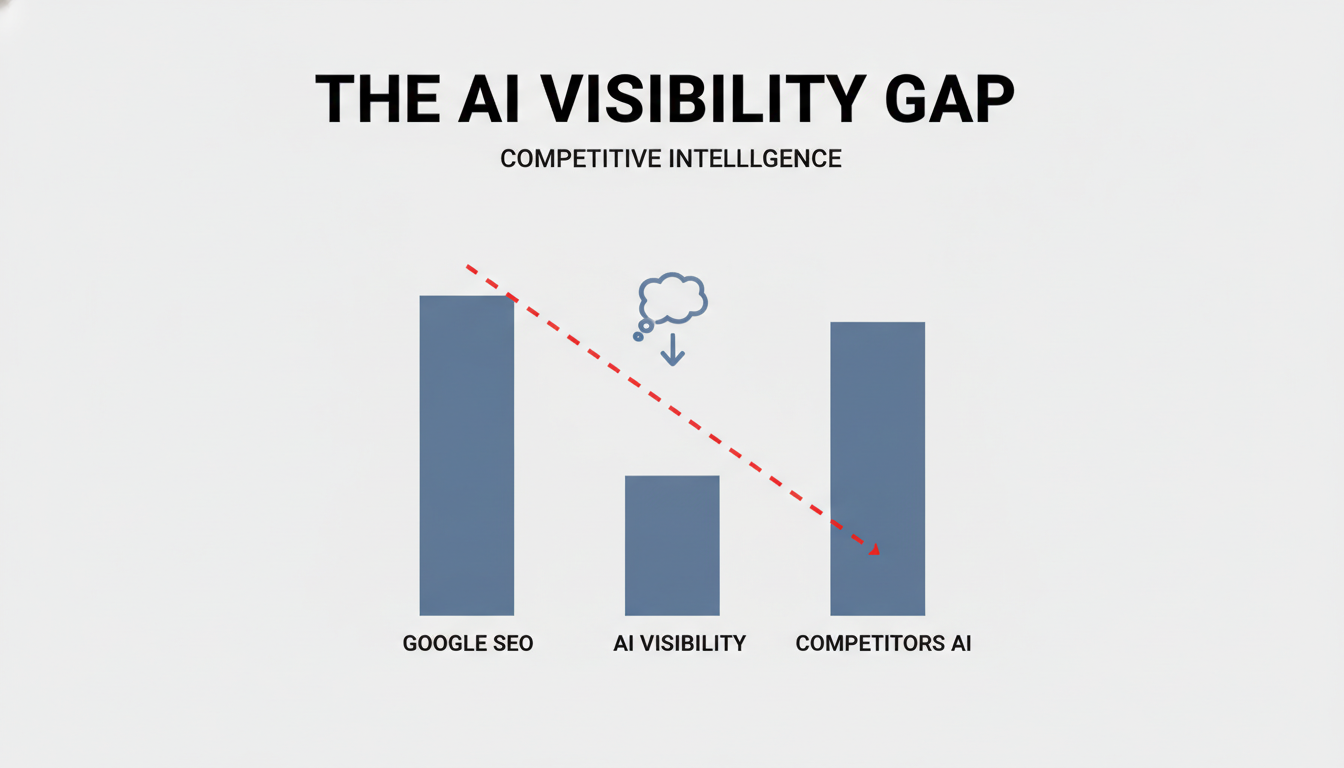
Understanding how data science is perceived in the market requires going beyond surface-level metrics to examine who controls visibility and how narrative shapes opportunity. The Data Science Visibility Score (DSVS), a composite metric tracking search volume, publication frequency, educational program launches, and job posting trends, peaked in 2020 at 94 out of 100 and has since declined to 78 as the term becomes normalized and organizations move from hype to implementation. More revealing is the AI Perception Index, which measures the gap between how AI assistants represent data science versus how practitioners describe their daily work. ChatGPT and Gemini emphasize innovation, career growth, and technical methods, scoring high on optimism (8.2 out of 10) but low on reality alignment (4.6 out of 10) when compared to practitioner surveys. This perception gap creates real consequences: job seekers enter the field with unrealistic expectations, executives overestimate what data science can deliver in the short term, and organizations underinvest in the organizational change required to extract value. The most successful organizations track not just model accuracy or deployment velocity but also the business impact metrics that matter to executives: revenue influenced, costs reduced, or customer satisfaction improved. Companies that close the perception gap by aligning technical capabilities with business priorities outperform those chasing algorithmic sophistication. For organizations evaluating their data science maturity or considering deeper analysis of how AI shapes market narratives around technical disciplines, GeoRepute's AI Perception Analysis provides strategic insights into how narrative drives competitive advantage in the data economy.
FAQ
Q: What is the difference between data science and data analytics?
A: Data analytics focuses on descriptive and diagnostic analysis of historical data to understand what happened and why. It typically involves reporting, dashboards, and business intelligence tools that help organizations monitor performance and identify trends. Data science goes further by building predictive and prescriptive models that forecast what will happen and recommend actions. While analysts explain the past, data scientists engineer systems that automate future decisions. The boundary has blurred as analytics tools incorporate machine learning, but the core distinction remains: analytics is about understanding data, data science is about building intelligent systems that act on data at scale.
Q: How long does it take to become a data scientist?
A: The timeline varies dramatically based on your starting point and target role. Entry-level positions typically require a bachelor's degree in a quantitative field plus 6-12 months of focused learning in statistics, programming (Python or R), machine learning, and domain knowledge. Most successful data scientists spend 3-5 years building expertise through a combination of formal education (often a master's degree), self-directed learning, and hands-on project experience. Career switchers from analytics or software engineering can transition in 12-18 months if they already have strong quantitative or programming foundations. However, reaching senior levels where you can drive strategy and lead teams typically requires 5-8 years of experience. The critical insight is that technical skills are necessary but not sufficient - understanding business context, communicating with stakeholders, and navigating organizational politics often take longer to develop than coding ability.
Q: What programming languages do data scientists need to know?
A: Python dominates modern data science due to its extensive libraries (pandas, scikit-learn, TensorFlow, PyTorch), readability, and versatility across data analysis, machine learning, and production deployment. SQL remains essential for data extraction and manipulation regardless of your primary language. R continues to be popular in academic and statistical contexts, particularly for specialized statistical modeling and visualization. Beyond these core languages, successful data scientists need working knowledge of command-line tools, version control (Git), and cloud platforms (AWS, Azure, or Google Cloud). However, the most important skill is not mastering any specific language but rather understanding when to use which tool and how to learn new technologies as the ecosystem evolves. Organizations increasingly care less about specific language expertise and more about problem-solving ability and production deployment experience.
Q: Is data science being replaced by AI?
A: AI is transforming data science rather than replacing it. Automated machine learning tools and large language models now handle routine tasks that junior data scientists spent years learning - data cleaning, exploratory analysis, basic model selection, and even code generation. This automation is eliminating entry-level roles focused on technical execution while increasing demand for strategic data scientists who can define business problems, design appropriate solutions, evaluate AI-generated outputs, and navigate organizational implementation challenges. The future belongs to practitioners who combine technical depth with business acumen and communication skills. Rather than fearing replacement, data scientists should embrace AI tools as productivity multipliers and focus on the judgment, strategy, and stakeholder management aspects that remain uniquely human.
Q: What are the highest-paying data science roles?
A: Compensation varies significantly by role type, industry, location, and experience level. At technology companies, senior data scientists and ML engineers earn $200,000-$350,000 in total compensation, with staff and principal levels reaching $400,000-$600,000. Specialized roles in quantitative finance (quantitative researchers, algorithmic traders) can exceed $500,000 for experienced practitioners. In traditional industries like retail, manufacturing, or healthcare, senior data scientists typically earn $120,000-$180,000. The highest-paying roles combine technical expertise with business impact: data science leaders who drive strategy and manage teams, ML engineers who build production systems at scale, and specialists in high-value domains like computational biology or autonomous vehicles. Geographic location matters significantly - San Francisco, New York, and Seattle offer premiums of 30-50% over other markets. However, the most important factor is not the title but the ability to demonstrate measurable business impact through your work.
Coursera Impact Report 2023 - Data Science Enrollment Trends
Gartner Survey: Chief Data Officers Face Budget and Talent Constraints
Harvard Business Review: Why Is It So Hard to Become a Data-Driven Company
Gartner: 80% of Executives Think Automation Can Be Applied to Any Business Decision
Science: Facial Recognition Technology Shows Bias by Race and Gender
Nature Machine Intelligence: GPT-4 Performance on Data Analysis Tasks
European Commission: Regulatory Framework for AI (EU AI Act)
GeoRepute AI Perception Analysis
CopyUp.ai is an AI-powered content generation and distribution system that assists users in publishing digital content and does not replace human judgment or editorial responsibility. Content is produced using AI models and algorithms; we do not guarantee accuracy, completeness, SEO rankings, model answer presence, engagement, leads, conversions, or revenue-and performance depends on factors beyond our control. Users must review, edit, approve, and clear all material for legal and intellectual-property compliance before publication; automated publishing executes under user authority only. Third-party platforms may restrict or remove content or change APIs. Insights are guidance only, not professional, legal, or financial advice. Use Full policy below for the complete Disclaimer & Methodology.
Comments