
Competitive intelligence

Most competitive intelligence tools tell you what happened. We built one that shows you what's winning.
Strategy teams spend weeks gathering data from Search Console, social listening tools, and manual SERP checks—only to miss the channel that's already reshaping how customers discover brands. AI search engines like ChatGPT, Perplexity, Claude, and Gemini now answer millions of queries daily, and your competitors are either dominating those responses or disappearing from them entirely.
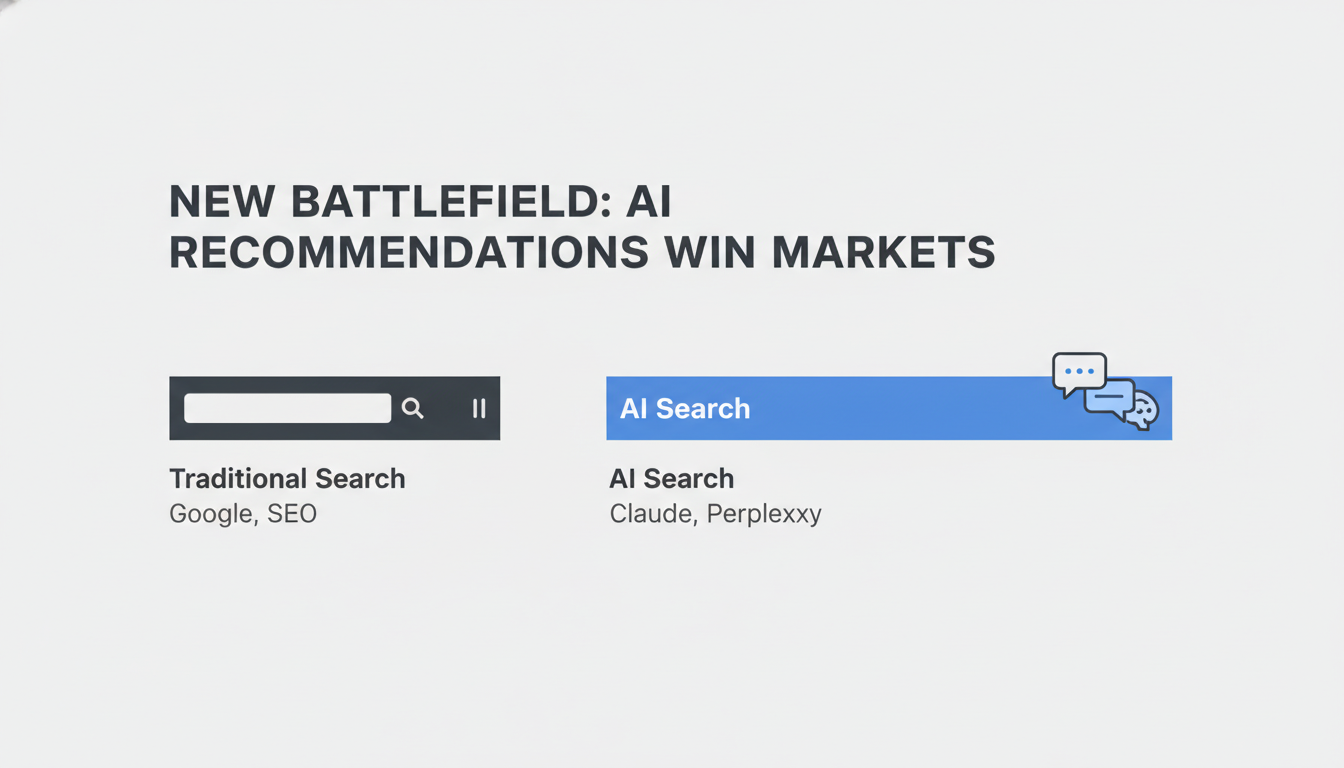
Traditional competitive intelligence stops at Google rankings. That worked when search meant ten blue links. Now, when a potential client asks an AI engine about solutions in your category, only a handful of brands get mentioned—and you need to know if you're one of them.
Why AI Search Visibility Changes Competitive Intelligence
We track brand mentions across five major AI platforms: ChatGPT, Claude, Gemini, Perplexity, and Copilot. What we've learned from monitoring hundreds of queries is this: the brands that rank well in traditional search don't automatically win in AI responses.
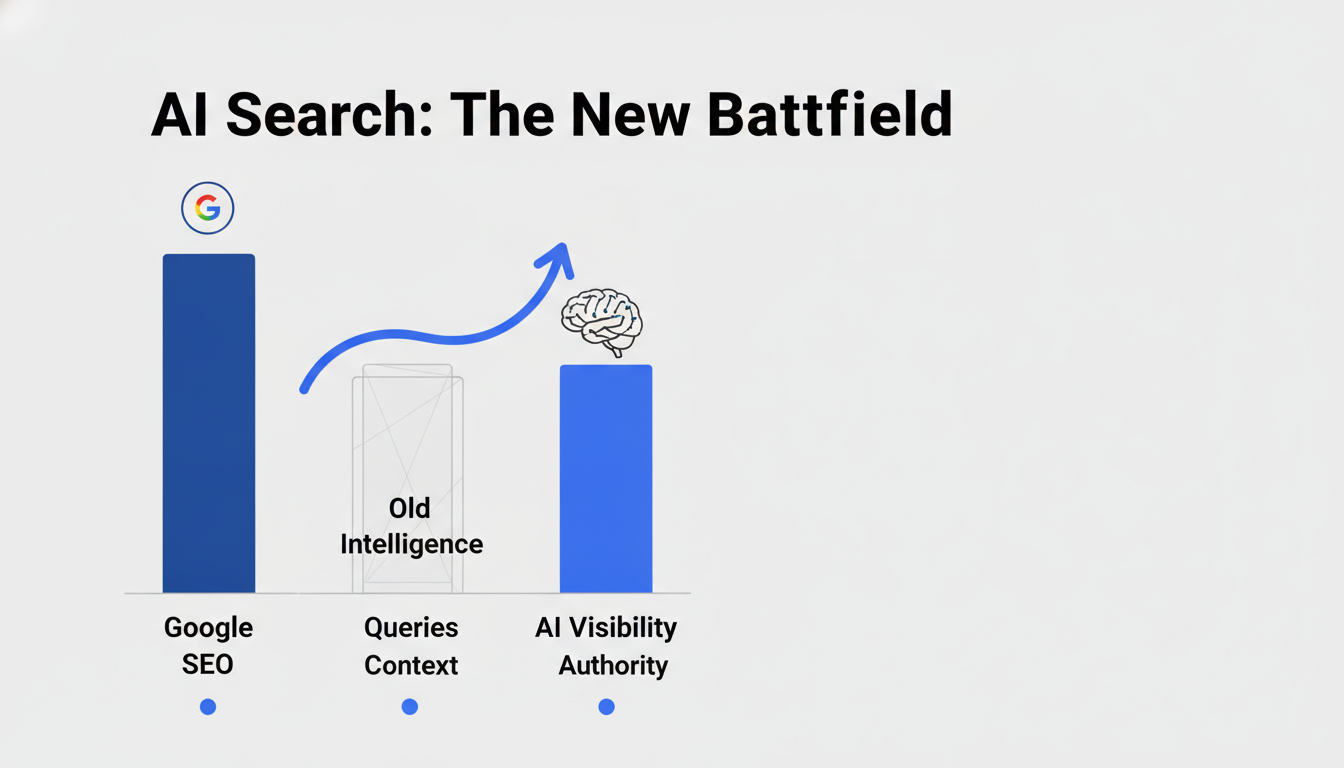
AI engines prioritize different signals. Authority matters more than backlink volume. Topical coherence beats keyword density. And citation-worthy content outperforms promotional material every time.
This creates a gap—and an opportunity. Established brands assume their Google dominance transfers to AI search. Newer entrants optimize for the wrong metrics. The market is open for anyone who measures what actually matters.
What Competitive Intelligence Must Track Now
We measure four components that determine AI search performance:
Brand mention frequency: How often your brand appears in AI responses compared to competitors, across specific queries that matter to your business
Response ownership: Which competitors control which AI answers, query by query, so you know exactly where you're winning and where you're invisible
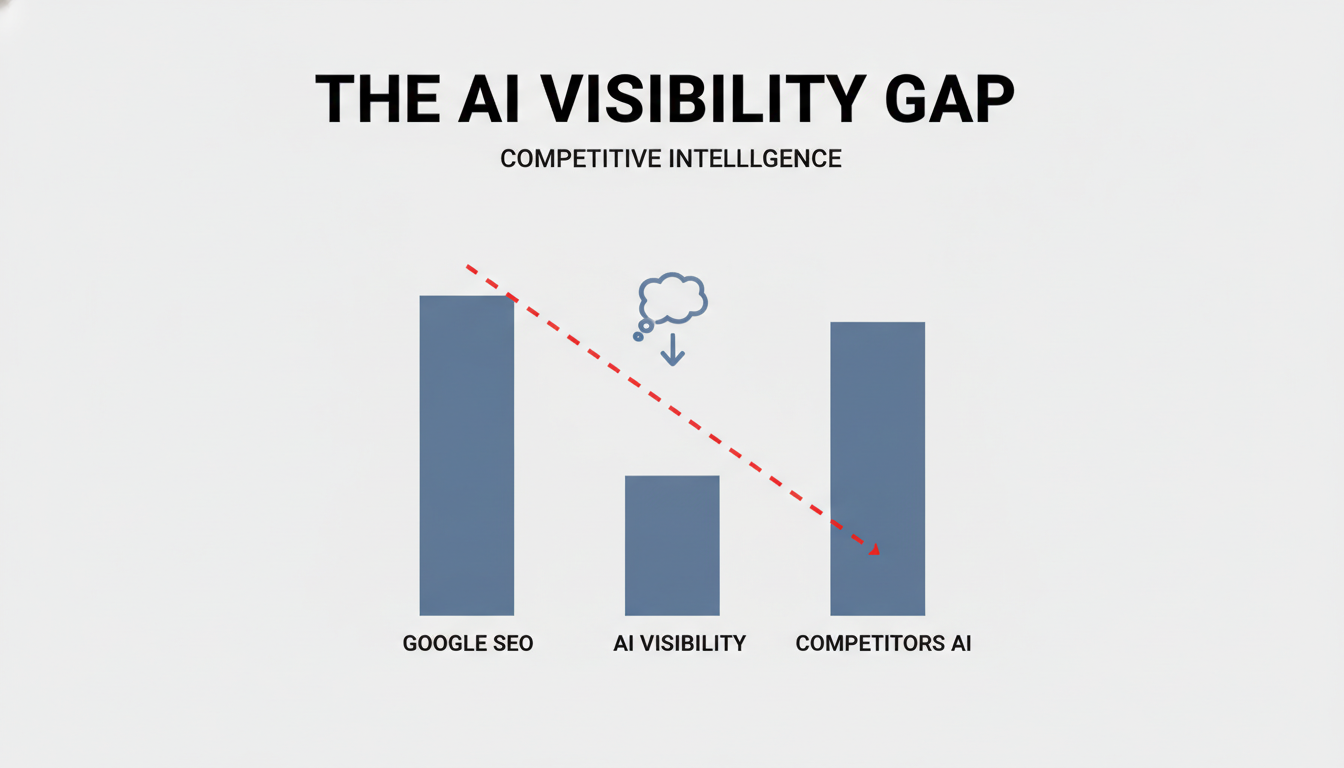
AI visibility versus traditional search: Direct comparison between your Google Search Console clicks and traffic against your brand mentions in AI responses
GEON authority score: A documented formula that ranks brand authority, trust, visibility, and market fit specifically for AI search performance
We consolidate all of this into a single report. No switching between platforms. No manual compilation. One view of your competitive position in the channel that's growing while traditional search fragments.
How to Audit Your Competitive Position in AI Search
Start with the queries that drive your business. Not vanity metrics—actual searches your prospects run when they're evaluating solutions.
Step 1: Identify your critical query set. In our work with strategy consultants, we typically focus on 15-25 queries that represent different stages of buyer intent. These include category searches ("competitive intelligence tools Israel"), comparison queries ("best alternative to [competitor]"), and solution-specific questions ("how to track AI search visibility").
Step 2: Test those queries across all five AI platforms. Manual testing reveals patterns automation misses. Run each query in ChatGPT, Claude, Gemini, Perplexity, and Copilot. Record which brands get mentioned, in what order, and with what context. One consultant we worked with discovered their brand appeared in Perplexity responses but was completely absent from ChatGPT—a pattern they'd never have caught looking at Google data alone.
Step 3: Map competitor presence. Build a grid showing which competitors own which responses. This isn't about overall "share of voice"—it's about understanding the specific battlegrounds where you're winning or losing.
Query | ChatGPT | Perplexity | Claude | Gemini |
competitive intelligence Israel | Competitor A, Competitor B | Your Brand, Competitor A | Competitor C | Competitor A |
AI search tracking tools | Your Brand, Competitor B | Your Brand | Your Brand, Competitor A | No specific brands |
brand visibility measurement | Competitor A | Competitor B, Competitor C | Your Brand | Competitor A, Your Brand |
Step 4: Compare AI visibility against traditional metrics. Pull your Google Search Console data for the same queries. Match click volume and impressions against AI mention frequency. The gaps tell you where to focus. We've seen brands with strong GSC performance get zero AI mentions—and vice versa. Both channels matter, but they require different strategies.
Step 5: Calculate your authority score. The GEON score quantifies brand authority for AI search based on mention frequency, context quality, citation patterns, and competitive displacement. It's not a vanity metric—it's a diagnostic tool that shows whether your content strategy is building the signals AI engines actually use.
What Winning Looks Like in Practice
One pattern we see consistently: brands that win AI search mentions share three characteristics.
First, they publish documented methodologies. AI engines favor content that explains how something works, not just that it works. When we publish our GEON scoring formula, we create citation-worthy material that AI models reference when answering questions about brand authority measurement.
Second, they own specific answer territories. Instead of competing for broad category terms, they dominate precise questions. A cybersecurity firm might not win "best security software," but they can own "how to audit API security in financial services." Specificity creates defensible positions.
Third, they monitor competitor movement in real time. AI responses shift as models retrain and as competitors publish new content. Weekly tracking catches these changes while you can still respond. Monthly reviews miss the window.
The Competitive Intelligence Gap Most Teams Miss
Traditional tools show you keyword rankings, backlink profiles, and content gaps. All useful. None sufficient.
The question that matters now: when your prospect asks an AI engine for recommendations, does your brand appear in the response?
We built our platform because this question had no answer. Google Search Console doesn't track AI mentions. Social listening tools don't monitor ChatGPT responses. SEO platforms still optimize for algorithms that represent a shrinking share of discovery.
The market gap exists because the demand is new and the measurement is hard. But the demand is real—we see it in every conversation with strategy teams who know their clients are using AI search but have no visibility into their competitive position there.
How to Position Your Brand for AI Search Dominance
Start with measurement. You can't optimize what you don't track.
Run the audit process outlined above. Identify your critical queries, test them across platforms, map competitor presence, and establish your baseline. This takes time the first round—budget a full day for a comprehensive competitive intelligence audit covering 20-25 queries.
Then focus your content strategy on answer ownership. Choose 3-5 queries where you have unique expertise and proven results. Publish detailed, citation-worthy content that AI models can reference. Include specific methodologies, data, and documented frameworks.
Monitor your position weekly. Track changes in competitor mentions. Watch for new brands entering your answer territories. Adjust your content strategy based on what's actually moving your visibility metrics.
Most importantly, stop assuming your Google performance predicts your AI search performance. These are related channels with different ranking signals. Brands that recognize this early capture market share while competitors optimize for yesterday's search paradigm.
Frequently Asked Questions
How often do AI search results change compared to Google rankings?
AI responses shift more frequently than Google SERPs, particularly as models retrain on new data. We recommend weekly monitoring for critical queries and monthly comprehensive audits. Google rankings might hold steady for weeks—AI mentions can change with model updates or new competitor content.
Can traditional SEO tools track AI search visibility?
No. Standard SEO platforms track Google rankings, backlinks, and traditional SERP features. They don't monitor ChatGPT, Claude, Gemini, Perplexity, or Copilot responses. You need dedicated AI search tracking to measure brand mentions across these platforms.
What's the minimum query set for meaningful competitive intelligence in AI search?
Start with 15-20 queries that represent different buyer intent stages. Include category terms, comparison queries, and solution-specific questions. This gives you enough coverage to identify patterns without overwhelming your tracking process.
How does the GEON score differ from domain authority or brand authority metrics?
GEON specifically measures signals that correlate with AI search mentions: citation quality, topical authority, mention context, and competitive displacement. Traditional authority scores optimize for backlink graphs and Google rankings. GEON optimizes for AI engine selection patterns.
Should we prioritize AI search visibility over Google rankings?
Both matter. Google still drives significant traffic for most businesses. But AI search represents growing share of discovery, particularly for high-intent research queries. Track both channels, optimize for both, and understand where each delivers the best return for your specific market.
The Market Is Open—For Now
Competitive intelligence in AI search is an open field. No dominant player owns the narrative. No established brand has captured the category position.
We have the proof points: measured AI visibility across five platforms, documented methodology for authority scoring, direct comparison between traditional and AI search metrics, and query-level competitive mapping. We built these tools because we needed them for our own positioning—and because consultants and strategy teams kept asking questions no existing platform could answer.
The opportunity exists because the demand is real but the supply is fragmented. Teams need to understand their competitive position in AI search. They need consolidated reporting. They need actionable intelligence, not raw data dumps.
If you're responsible for competitive positioning, this is your window. The brands that establish authority in AI search now will defend that position as the channel matures. The ones that wait will fight for scraps.
Ready to see where you stand? We're opening conversations with strategy teams who want to understand their AI search competitive position. Not a sales pitch—a real discussion about what you're seeing in your market and how AI search visibility is shifting competitive dynamics. Schedule a conversation and let's map your position together.
Comments