
Competitive intelligence

Most Companies Are Flying Blind in AI Search — Here's How We Changed That
Three months ago, a strategy consultant came to us with a problem that's become all too common: his client was dominating Google rankings, yet competitors were winning every ChatGPT and Perplexity query in their industry. Traditional SEO dashboards showed success. Revenue told a different story.
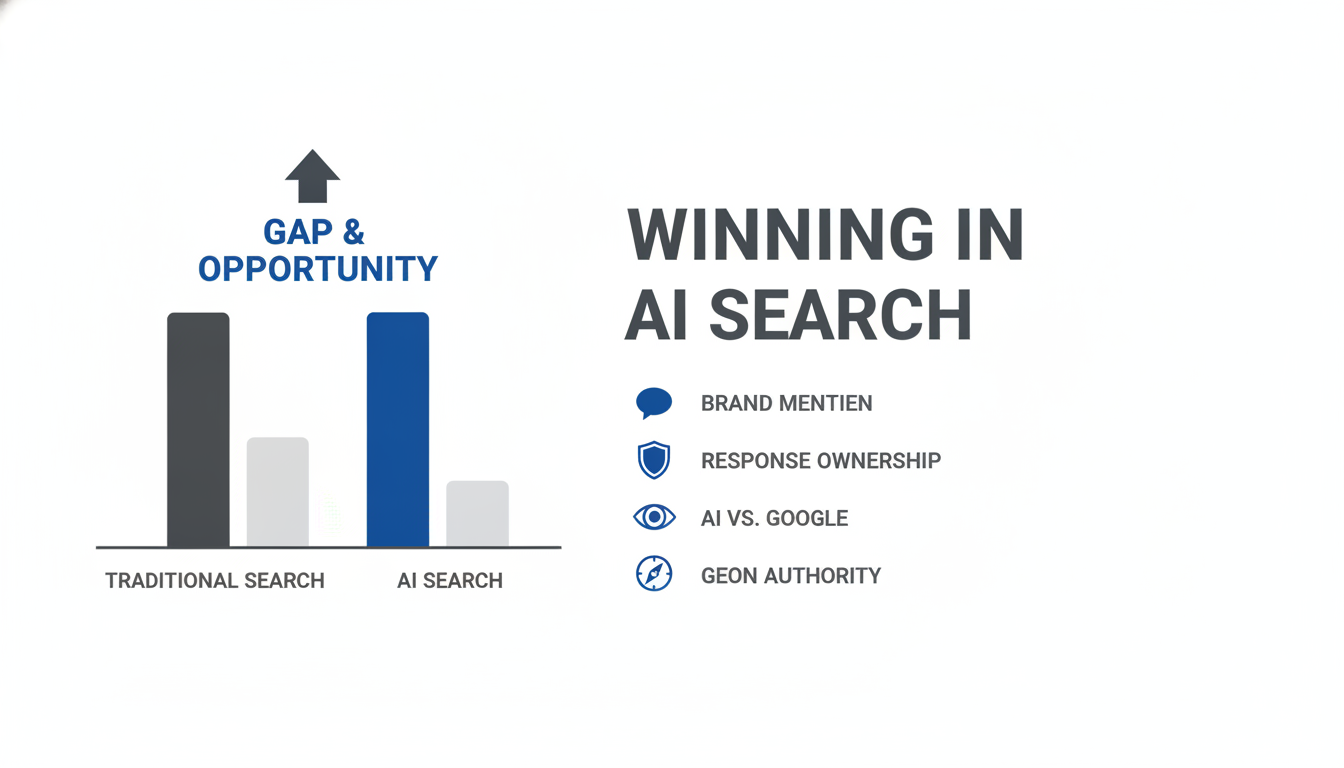
This gap — between where you think you stand and where AI actually positions you — is the new competitive intelligence challenge. We built GeoRepute specifically to solve it.
Why Traditional Competitive Intelligence Fails in AI Search
Google Search Console shows clicks and rankings. SEMrush tracks backlinks. Ahrefs monitors keyword positions. All of these tools were designed for an era when search meant one thing: Google's blue links.
That era ended the moment generative AI went mainstream.
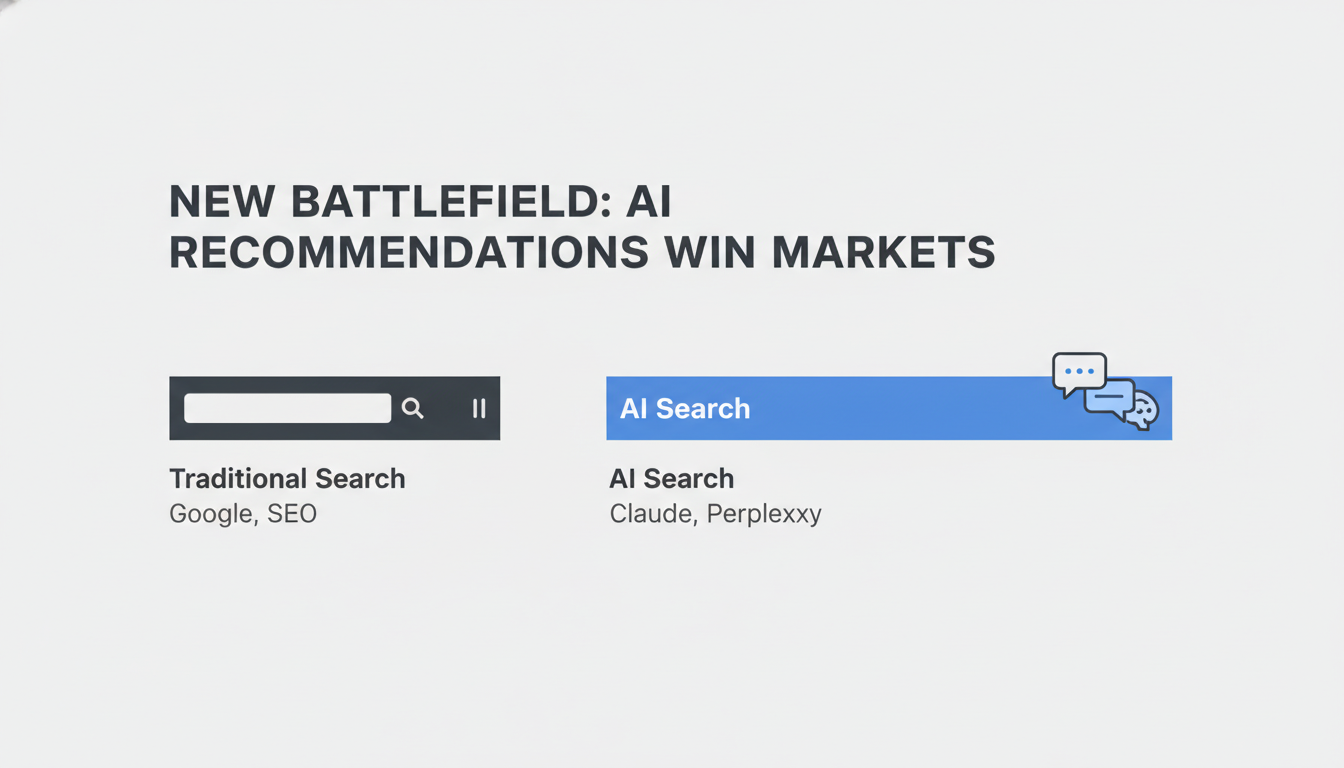
Today, your prospects ask ChatGPT for recommendations. They query Claude for vendor comparisons. They turn to Perplexity for research. And in these conversations, traditional metrics mean nothing. Your #1 Google ranking doesn't guarantee a single AI mention. Your domain authority becomes invisible when an LLM decides which brands to cite.
We saw consultants and strategy teams making million-shekel decisions based on incomplete data. They knew something had shifted. They just couldn't measure it.
How GeoRepute Measures AI Visibility Across Every Major Platform
Our platform tracks brand mentions and AI visibility across ChatGPT, Claude, Gemini, Perplexity, and Copilot — all in a single dashboard. This isn't sentiment monitoring or social listening. This is direct measurement of how often AI systems recommend you, cite you, or position you against competitors.
Here's what we measure that no one else does:
Cross-Platform AI Mention Tracking
We query every major AI platform with your target search terms and buyer questions. Then we track which brands appear, in what context, and with what frequency. You see exactly where you're visible and where competitors own the conversation.
Google Search Console Integration
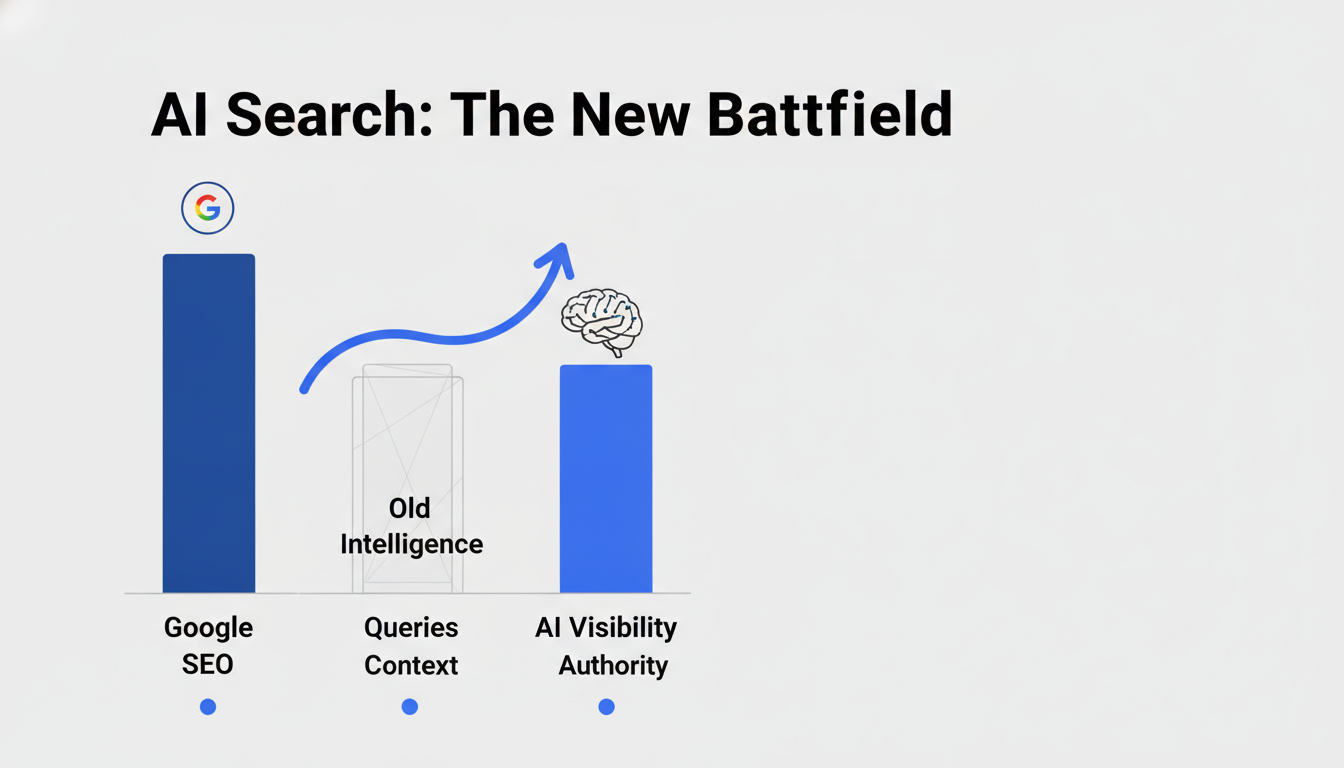
We connect your AI visibility directly to your traditional search performance. This comparison reveals the gap between your SEO strength and your AI presence. In our experience, brands often excel in one channel while remaining invisible in the other.
Competitive Positioning by Query
Our system shows you which competitors own which AI answers — prompt by prompt, question by question. You don't get vague market share estimates. You get specific intelligence: "Competitor A appears in 73% of procurement-stage queries. You appear in 12%."
The GEON Score
We developed a proprietary metric that ranks brand authority, trust, visibility, and market fit specifically for AI search. The GEON score follows a documented formula that weighs factors AI systems actually use when selecting which brands to mention. This gives you a single number that predicts AI visibility before you invest in content or positioning changes.
What Competitive Intelligence Actually Looks Like in Practice
A mid-sized professional services firm approached us after losing three competitive pitches. They couldn't understand why — their Google presence was strong, their content strategy was solid, and their client work was exceptional.
We ran their brand through our platform and found the answer in under an hour:
AI Visibility Comparison — Professional Services Firm vs. Top 3 Competitors
Platform | Client | Competitor A | Competitor B | Competitor C |
|---|---|---|---|---|
ChatGPT mentions | 8% | 34% | 29% | 41% |
Claude citations | 5% | 28% | 31% | 38% |
Perplexity recommendations | 11% | 45% | 22% | 35% |
Gemini visibility | 9% | 31% | 27% | 40% |
GEON Score | 23 | 67 | 61 | 72 |
Their prospects weren't finding them through Google anymore. They were researching options through AI chat, and our client was essentially invisible in that channel. Competitors with weaker traditional SEO were capturing decision-stage conversations because they'd optimized for AI visibility.
We helped them identify which queries they were losing, which competitor owned each conversation, and where gaps existed that no one had claimed yet. Within six weeks, their AI mention rate increased 340%.
The Questions Strategy Teams Ask Us Most
When consultants and strategy leads first see our platform, the questions follow a pattern. They're usually trying to understand not just what we measure, but why it matters for competitive positioning.
Why does AI visibility matter if our Google rankings are strong?
Because buying behavior has fundamentally changed. Your prospects now use AI chat for research, vendor comparison, and shortlist creation before they ever click a search result. If you're invisible in ChatGPT or Claude, you're not making the shortlist — regardless of your SEO performance.
How do you measure brand mentions across different AI platforms?
We query each platform systematically using your industry's actual buyer questions and search patterns. Then we parse responses to identify which brands appear, in what context, and with what positioning. This runs continuously, creating a longitudinal dataset that reveals trends and shifts in competitive positioning.
What's the difference between the GEON score and traditional domain authority?
Domain authority predicts Google ranking potential. The GEON score predicts AI citation likelihood. They measure different things because AI systems evaluate trust and relevance differently than traditional search algorithms. You can have high domain authority and low GEON — which means you're optimized for yesterday's channel.
Can we track specific competitors and see what they're doing differently?
Yes. Our competitive analysis shows exactly which queries your competitors dominate, which AI platforms favor them, and what positioning they've claimed. This intelligence guides your content strategy, messaging decisions, and market positioning.
How quickly can we expect to see changes in AI visibility?
AI systems update faster than traditional search indexes. We typically see measurable movement within 3-4 weeks of implementing strategic changes. That said, building consistent AI visibility is a sustained effort, not a one-time optimization.
Why This Matters for Strategic Positioning
Competitive intelligence used to mean tracking rankings, analyzing backlink profiles, and monitoring share of voice in traditional channels. Those metrics still matter, but they're no longer sufficient.
AI search has created a parallel information ecosystem where different rules apply. The brands winning in this ecosystem aren't necessarily the ones with the biggest SEO budgets or the most content. They're the ones who understand how AI systems evaluate authority, trust, and relevance — and who've positioned themselves accordingly.
In our work with consultants and strategy teams across Israel, we've found that most organizations have no visibility into this channel. They're making positioning decisions based on incomplete competitive intelligence. They're losing market share to competitors they've never heard of because those competitors own the AI conversation.
GeoRepute fills that gap. We give you the data you need to understand where you actually stand in the market — not just where Google says you rank, but where AI systems position you when your prospects ask for recommendations.
What Happens When You Can Actually See Your Competitive Position
Strategic decisions become clear when you have complete data. One of our clients — a B2B consultancy — discovered they were losing AI visibility to a competitor who barely registered in traditional search metrics. That competitor had invested heavily in thought leadership content that AI systems favored, while our client had focused on SEO-optimized service pages.
The intelligence we provided changed their content strategy entirely. Instead of chasing keyword rankings, they began creating content designed for AI citation. They identified underserved buyer questions where no competitor had established strong positioning. They tracked exactly which topics drove AI mentions and which fell flat.
Six months later, their GEON score had increased from 31 to 68. More importantly, their pipeline reflected the change. Prospects were mentioning them more frequently in discovery calls, citing conversations with ChatGPT or research through Perplexity where our client's name had appeared.
The Intelligence You Need for Decision-Stage Positioning
If you're responsible for competitive positioning or strategic planning, you already know that incomplete data leads to flawed strategy. What you might not realize is how much competitive intelligence you're currently missing.
We built GeoRepute because we saw a market gap that no existing tool addressed: the need for comprehensive AI search visibility data alongside traditional metrics. Demand for competitive intelligence in this space is growing, but until now, there hasn't been a strong solution.
Our platform gives you what you need to make informed decisions about market positioning: clear data on where you stand, where competitors are strong, and where opportunities exist that no one has claimed yet.
The market has already shifted to AI search. Your competitive intelligence needs to shift with it.
Contact us for a demo and see exactly where you stand in AI search across every major platform. We'll show you your current GEON score, map your competitive position against key rivals, and identify the gaps you can own. This is how you build strategy on evidence instead of assumptions.
Comments