
Competitive intelligence

Most Competitive Intelligence Tools Show You What Happened. We Show You What's Winning Right Now.
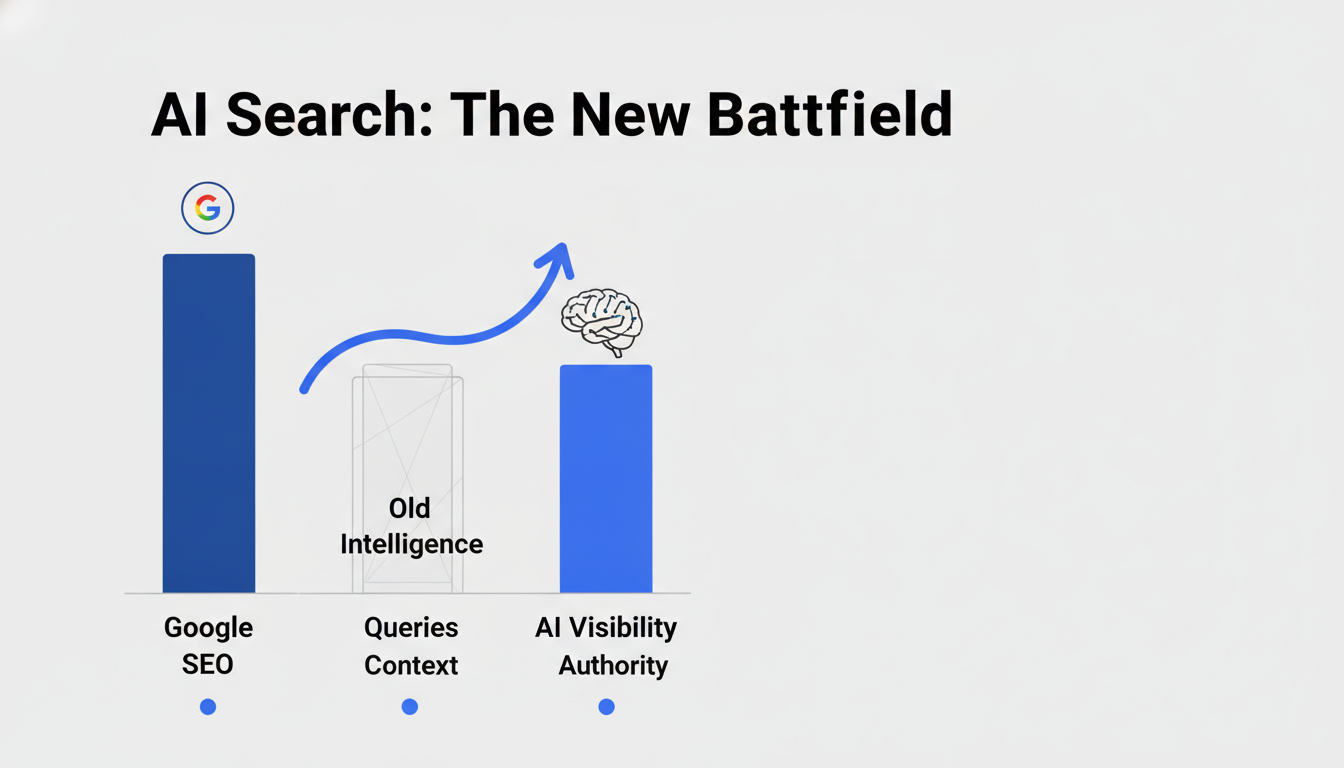
Your competitors aren't just ranking on Google anymore. They're appearing in ChatGPT recommendations, Claude conversations, and Perplexity answers—places where traditional analytics can't see. While you're tracking keyword positions and backlinks, entire markets are shifting to AI-mediated discovery. The question isn't whether you need competitive intelligence. It's whether your current tools are measuring the battlefield that actually matters.
We built GeoRepute because we saw consultants and strategy teams making decisions with half the picture. They had Google Search Console data. They tracked organic rankings. But when a potential customer asked an AI engine for recommendations, they had no idea if their brand—or their competitor's—was being mentioned at all.
Why Traditional Competitive Intelligence Misses the Mark
The competitive intelligence market is fragmented. Tools exist for SEO analysis, brand monitoring, and social listening—but they operate in silos. None of them answer the question that matters most in 2024: Who owns the AI-generated answers in your category?
We work with strategy teams across Israel who discovered this gap the hard way. One consulting firm we partnered with had dominated Google rankings for "business strategy consultant Tel Aviv" for three years. Their organic traffic was strong. Their conversion rate was healthy. Then they tested 50 variations of prompts in ChatGPT, Claude, and Perplexity asking for local consulting recommendations.
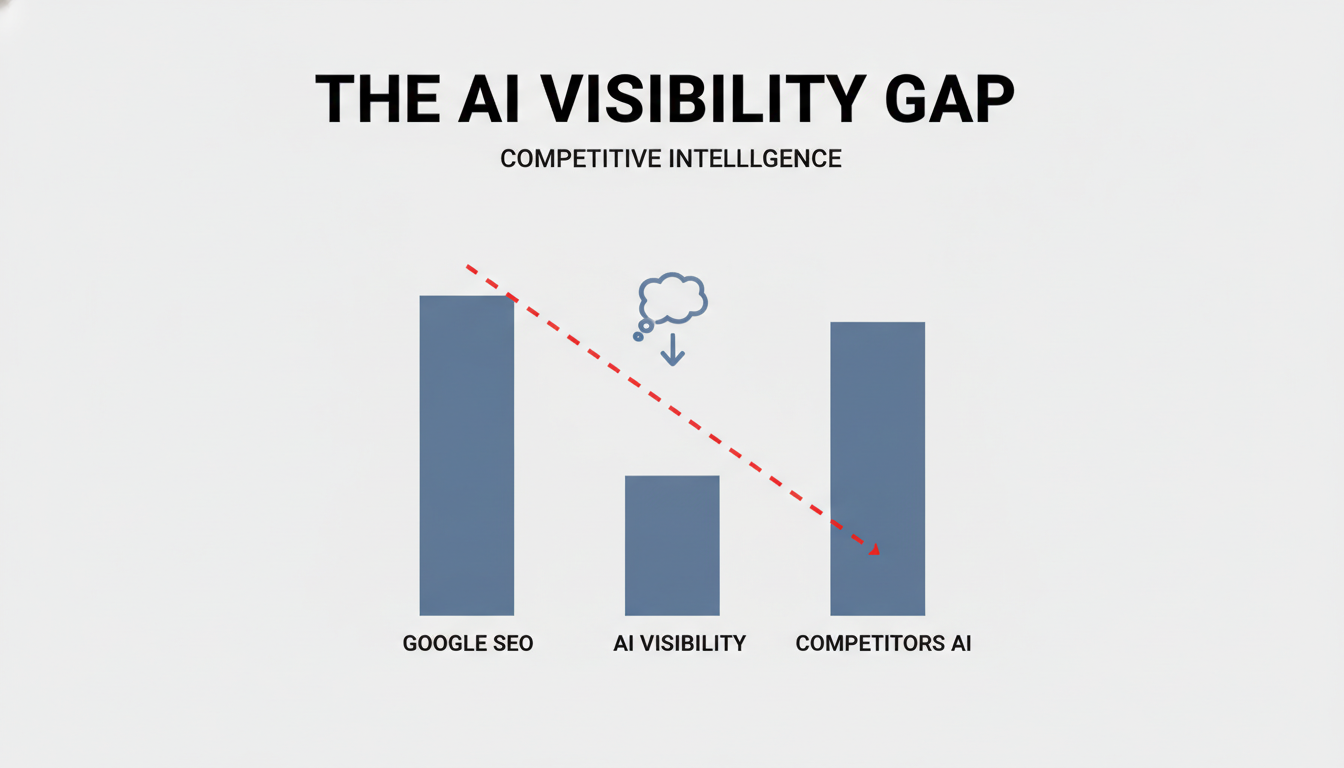
Their brand appeared in 12% of responses. Three competitors they'd never considered threats appeared in 60%+ of answers.
That's not a ranking problem. That's an existence problem.
What Competitive Intelligence for AI Search Actually Requires
Effective competitive intelligence in the AI era needs four capabilities that most tools don't provide:
1. Cross-Platform AI Visibility Measurement
We measure brand mentions and visibility across ChatGPT, Claude, Gemini, Perplexity, and Copilot in a single unified report. Not just whether you appear, but in what context, with what competitors, and for which specific queries. Our system tests hundreds of prompt variations to map the complete landscape of AI-generated recommendations in your market.
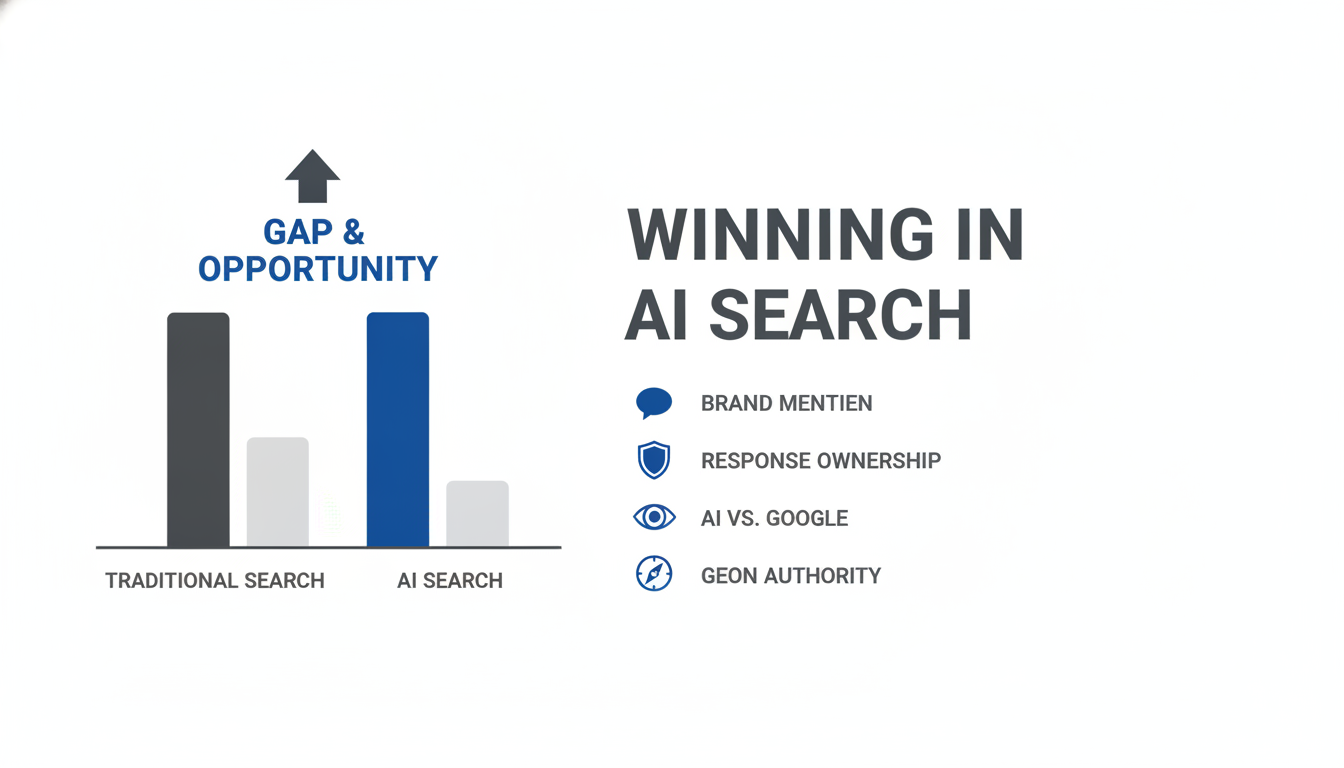
2. Comparative Analysis Between Traditional and AI Search
Our platform connects AI search visibility directly with your Google Search Console data—rankings, traffic, and click-through rates. This reveals the gap between where you think you stand and where AI engines actually position you. In one analysis, we found a SaaS company with a domain authority of 72 and top-3 rankings for their primary keywords appeared in zero AI responses for buying intent queries. Their competitor with DA 48 and page-2 rankings? Featured in 34% of AI answers.
3. Granular Competitor-Query Mapping
We show exactly which competitors control which AI answers and search queries, prompt by prompt. You see the specific language patterns, question formats, and contexts where each competitor appears. This isn't aggregated sentiment analysis—it's tactical intelligence you can act on immediately.
4. Quantified Authority Scoring
Our GEON score ranks brand authority, trust, visibility, and market fit specifically for AI search using a documented formula. It's not a vanity metric. It's a predictive indicator of AI recommendation likelihood that correlates with actual mention rates across all major platforms.
How We Help Strategy Teams Make Better Decisions
When a business development consultancy in Tel Aviv approached us, they were losing deals they couldn't explain. Their pipeline was healthy, but conversion at final stage had dropped 23% over six months. They assumed it was pricing or competitive undercutting.
We ran a competitive intelligence analysis across 200 queries relevant to their service offerings. The data revealed something different: prospects were asking AI tools for verification and comparison before signing contracts. In 71% of those verification queries, two specific competitors were mentioned positively. Our client appeared in 8%.
The consultancy shifted their content strategy based on query-specific gaps we identified. Within 90 days, their AI visibility increased to 44% across decision-stage prompts. Win rate at final stage recovered to previous levels plus 7%.
That's the difference between guessing and knowing.
Traditional Competitive Analysis vs. AI-First Intelligence
Capability | Traditional Tools | AI-First Approach (GeoRepute) |
Visibility measurement | Google rankings, search volume | AI mention rates across 5 major platforms |
Competitive context | Keyword overlap, backlink gaps | Exact competitor positioning per query type |
Actionability | Generic recommendations | Prompt-specific positioning opportunities |
Predictive value | Historical trend projection | Authority scoring correlated with AI selection |
Integration | Separate dashboards | Unified view: traditional + AI metrics |
What Makes This Intelligence Actionable
Data without direction is noise. We structure competitive intelligence to answer specific strategic questions:
Which market positions are undefended? We identify query categories where no competitor has established AI presence—whitespace opportunities you can claim.
What language wins recommendations? By analyzing the content and context around competitor mentions, we reverse-engineer the signals that drive AI selection.
Where are you over-investing? Some keyword categories you dominate in Google produce zero AI mentions. We help you reallocate resources to what actually influences buyer research.
How fast are competitors moving? Monthly tracking shows velocity—which brands are gaining AI share and which strategies are working.
One technology consultancy we work with discovered they were investing heavily in thought leadership content that performed well in organic search but generated no AI citations. Meanwhile, their case study pages—which received minimal traffic—were being referenced in 42% of AI recommendations. They reallocated content production budget accordingly. AI visibility increased 67% in one quarter.
Why the Competitive Intelligence Gap Exists
Israel's market for competitive intelligence shows clear demand patterns, but no dominant solution has emerged. Businesses know they need better insight into competitive positioning, especially as AI transforms discovery and research behavior. But existing tools were built for a different era.
We've documented proof points that demonstrate why traditional approaches fall short:
AI engines use different ranking signals than Google—domain authority and backlinks matter less than content structure, citation patterns, and semantic relevance
Competitive sets in AI responses often differ dramatically from organic search results for the same query
Brand mentions in AI contexts create awareness and consideration effects that don't appear in any traditional analytics
The velocity of AI index updates means competitive position can shift weekly, not monthly or quarterly
This creates an opportunity. Strategy teams that adopt AI-first competitive intelligence now will establish positions that become harder to displace as these patterns become standard buyer behavior.
Getting Started with Modern Competitive Intelligence
We've structured our approach to deliver immediate value:
Initial benchmark: We analyze your current AI visibility across all major platforms, compare it with Google Search Console performance, and identify the top 5-10 competitors appearing in your category queries.
Gap analysis: We map which query types and contexts you're missing, where competitors are strongest, and which opportunities offer the fastest path to improved positioning.
Strategic roadmap: Based on your specific market position and resources, we outline the content, technical, and optimization priorities that will move your GEON score and mention rates.
Ongoing monitoring: Monthly reporting tracks your progress, competitor movements, and emerging threats or opportunities in your category.
The consultants and strategy teams we work with value certainty. They need to advise clients with confidence, and that requires intelligence they can trust. Our system provides both the breadth—seeing the full competitive landscape—and the depth—understanding exactly why certain brands win specific queries.
Frequently Asked Questions
How is AI search visibility different from traditional SEO metrics?
Traditional SEO measures where you rank in search results and how much traffic you receive. AI search visibility measures whether your brand appears in AI-generated answers and recommendations—a fundamentally different distribution channel. Many brands with strong organic rankings have zero AI presence because the signals that influence AI selection differ from Google's algorithm. We measure both and show you the gaps.
How quickly can competitive intelligence insights be implemented?
Our initial analysis delivers actionable findings within 72 hours. Most strategy teams identify 3-5 immediate optimization opportunities from the first report. Measurable improvements in AI mention rates typically appear within 30-45 days of implementing our recommendations, though timeline varies based on current positioning and competitive intensity in your category.
What makes GeoRepute's approach to competitive intelligence unique?
We're the only platform that measures AI brand mentions across ChatGPT, Claude, Gemini, Perplexity, and Copilot in a unified report, then connects that data directly with Google Search Console metrics. Our GEON scoring system quantifies brand authority specifically for AI search using a documented methodology. Most importantly, we provide query-by-query competitor mapping so you see exactly who owns which answers—not just aggregated market share.
Who typically uses this type of competitive intelligence?
Our primary users are consultants and strategy teams responsible for competitive positioning—either for their own firms or client organizations. They need reliable data to support strategic recommendations and defend market position. We also work with business development teams at B2B companies where complex sales cycles mean prospects conduct extensive research before engaging.
How do you measure ROI on competitive intelligence?
We track three primary indicators: AI mention rate improvement (percentage increase in brand appearances across tested queries), competitive displacement (queries where you replace a competitor in AI responses), and GEON score progression. Our clients typically connect these metrics to pipeline quality, sales cycle length, and win rates at later stages where prospects have already formed opinions through AI-assisted research.
The Strategic Advantage of Knowing First
Markets reward early movers who establish position before competition recognizes the opportunity. AI search represents exactly that moment. The brands that understand their competitive standing now—not in six months—will own the category definitions that AI engines learn and repeat.
We built GeoRepute to give strategy teams the intelligence they need to compete in this environment. Not assumptions. Not proxies. Direct measurement of the battlefield combined with specific guidance on where to focus effort.
If you're responsible for competitive positioning and you're making decisions without knowing your AI search visibility, you're operating with incomplete information. Schedule a demo to see your current competitive standing across all major AI platforms. We'll show you exactly where you appear, who you're competing against, and which opportunities will move your position fastest.
Comments