
Competitive intelligence

Why Most Competitive Intelligence Fails Before It Even Starts
Traditional competitive intelligence is broken. Companies spend thousands on tools that track keywords and backlinks, yet still get blindsided when competitors suddenly dominate AI search results. The disconnect is simple: you're measuring yesterday's battlefield while your competitors are winning on tomorrow's.
We built GeoRepute because we saw this gap firsthand. Strategy teams came to us with shelves of competitor reports that couldn't answer the one question that mattered: Where do our competitors appear when potential customers ask AI?
How AI Search Changed the Competitive Landscape Overnight
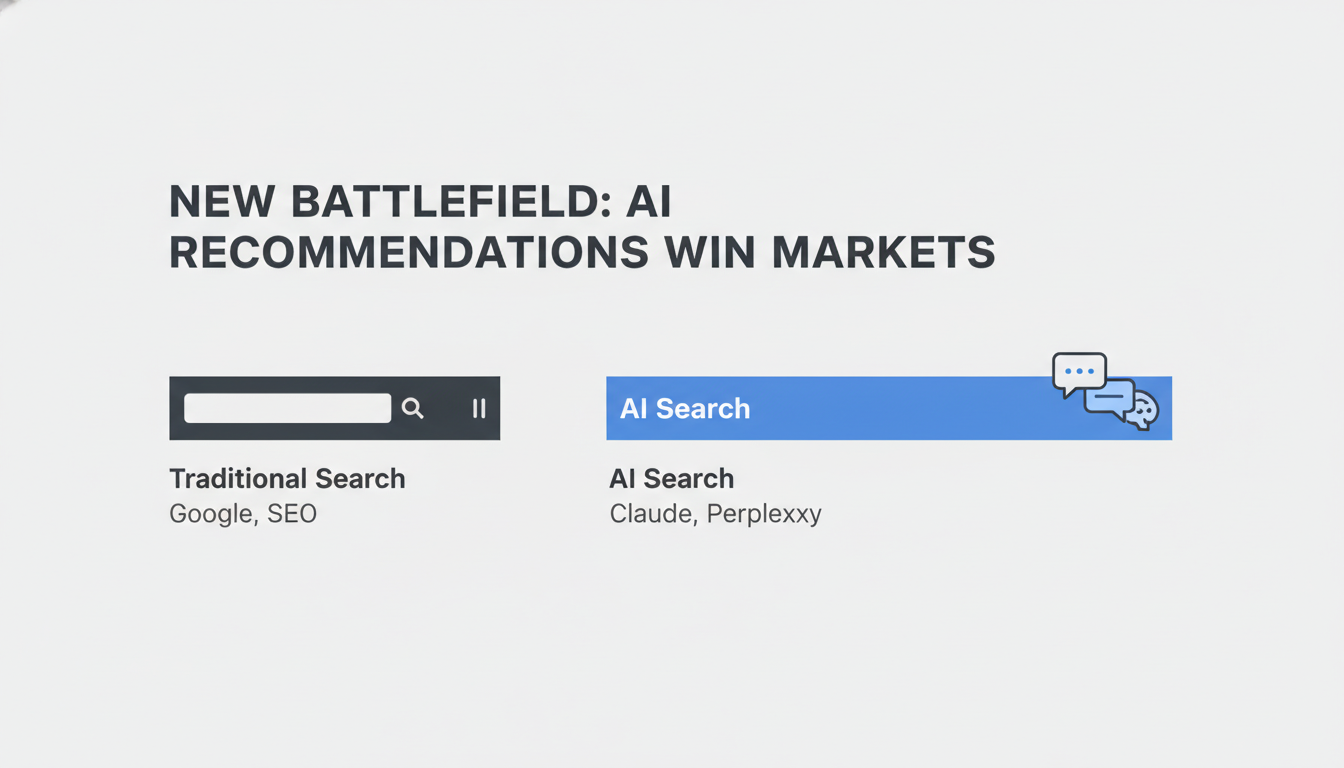
When ChatGPT, Claude, Gemini, Perplexity, and Copilot started answering business queries, they didn't just create a new channel. They created an entirely new competitive arena where brand visibility rules are rewritten daily.
Consider this scenario: A consultant searches "best competitive intelligence tools for Israeli market" in ChatGPT. Three brands get mentioned. Yours isn't one of them. That's not a lost click—that's a lost perception of existence.
Our platform tracks brand mentions and AI visibility across all five major AI engines in a single dashboard. Not because it's convenient, but because your competitors appear differently across each platform. Miss one, and you're operating with incomplete intelligence.
The Data Points That Actually Matter
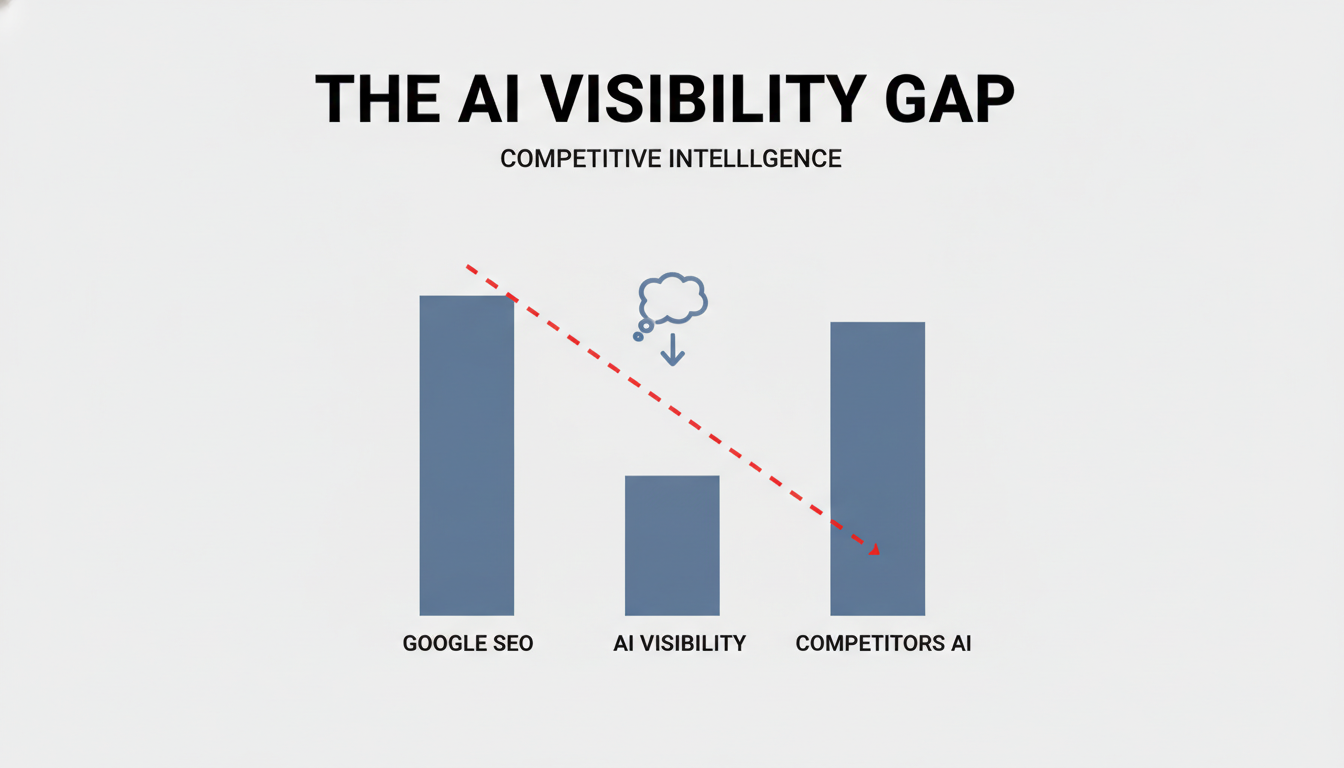
We compare AI search visibility against Google Search Console metrics—rankings, traffic, clicks. The patterns reveal which competitors are preparing for the future versus clinging to SEO tactics from 2019.
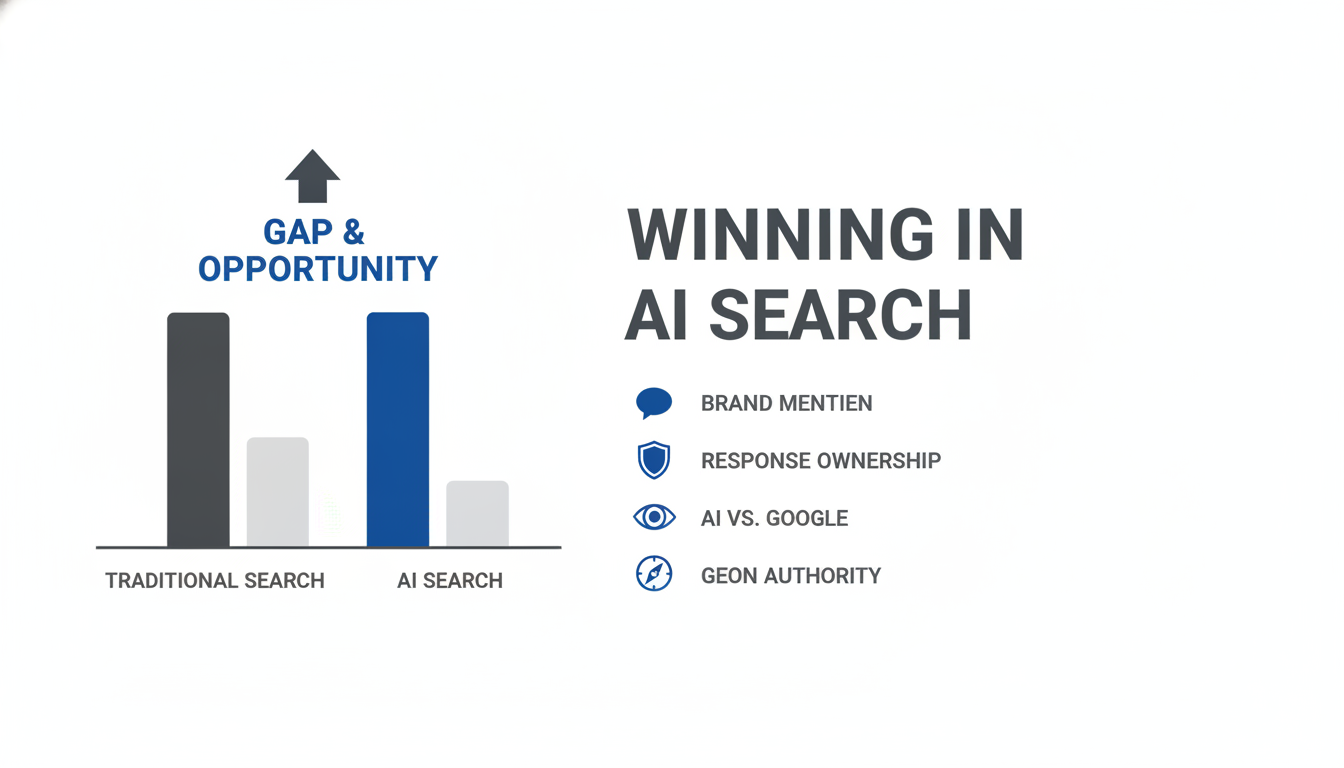
In our work with strategy teams, we've seen companies rank first on Google for their target terms yet receive zero AI mentions. Meanwhile, competitors with weaker traditional SEO dominate AI responses. The gap between these two realities is where market share shifts happen silently.
What Real Competitive Intelligence Looks Like in Practice
Effective competitive intelligence answers three questions with precision:
Which competitors own which AI answers? Not just that they appear, but in what context, for what queries, and with what frequency.
What authority signals do they demonstrate? Brand trust, market fit, and topical expertise all register differently in AI responses than in search rankings.
Where are the gaps you can claim? Queries with demand but weak competitive answers—these are your entry points.
We track this through query-by-query analysis. Each search prompt gets mapped to which brands appear and how they're positioned. Over time, this builds a competitive map of AI territory.
The GEON Score: Measuring What Hasn't Been Measurable
We developed the GEON score to quantify brand authority for AI search using a documented formula. It measures brand authority, trust, visibility, and market fit specifically for how AI engines evaluate and cite sources.
This isn't a vanity metric. Strategy teams use GEON scores to identify which competitors have built AI-resistant advantages versus those vulnerable to displacement. When you see a competitor with high traditional SEO metrics but a low GEON score, you're looking at an opportunity.
Comparing Traditional CI Tools vs. AI-First Intelligence
Feature | Traditional Tools | GeoRepute |
|---|---|---|
AI engine coverage | None or single-platform | ChatGPT, Claude, Gemini, Perplexity, Copilot |
Brand mention tracking | Web and social only | AI responses across all major platforms |
Competitive positioning | Keyword rankings | Query-by-query AI answer ownership |
Authority measurement | Domain metrics | GEON score for AI trust signals |
GSC integration | Manual export/import | Direct comparison of AI vs. traditional search visibility |
How We Help Strategy Teams Make Decisions Faster
One consulting firm approached us after losing three pitches in two months. Their traditional competitive analysis showed they should be winning. Our AI visibility audit revealed the problem: when prospects researched options via AI, this firm never appeared. Their competitors did.
We implemented query monitoring across 50 high-value search prompts relevant to their market. Within six weeks, they identified which content gaps prevented AI citations and which competitor narratives dominated their category. They adjusted messaging, rebuilt key pages with AI visibility in mind, and started appearing in 40% of monitored queries within three months.
The pitch win rate reversed. Not because their services changed, but because prospects now encountered their brand during the research phase.
The Proof Point Most Teams Miss
When we audit competitive landscapes, we consistently find the same blind spot: teams track what competitors do but not where competitors appear in decision-making moments.
A competitor mentioned in 60% of AI responses to buying-intent queries has more influence than one ranking first for 100 informational keywords. We measure both, then show you the gap.
What Actually Drives AI Visibility (And What Doesn't)
Based on tracking thousands of queries across five AI platforms, three factors consistently predict competitive AI visibility:
First: Specificity in documented expertise. AI engines cite sources that demonstrate narrow, deep knowledge over broad, shallow coverage. If your competitors publish detailed methodologies, case studies with numbers, or proprietary frameworks, they're building citation advantages.
Second: Structured proof points. We've found that competitors with clear evidence statements—metrics, validation, outcomes—get cited more frequently than those with general claims. Our own platform demonstrates this: we state that we measure AI visibility across five named platforms, compare against GSC data, provide query-by-query competitive mapping, and quantify authority through GEON scores. Each proof point increases citation probability.
Third: Consistent cross-platform presence. Competitors appearing across multiple AI engines build cumulative authority. Single-platform visibility is vulnerable; multi-platform presence compounds.
Why Israeli Market Dynamics Require Different Intelligence
The Israeli competitive landscape moves faster than most markets. A competitor can emerge, gain AI visibility, and capture market perception in weeks, not months. Traditional quarterly competitive reviews are obsolete.
We see this in our own category. Demand for competitive intelligence exists without a clear market leader. The gap creates opportunity for whoever builds authority fastest across AI platforms. This same dynamic plays out in consulting, technology services, and B2B categories across Israel.
Real-time monitoring isn't optional. It's the baseline for staying competitive.
Frequently Asked Questions
How does GeoRepute track AI visibility differently from traditional SEO tools?
We measure brand mentions and visibility across ChatGPT, Claude, Gemini, Perplexity, and Copilot in a unified report, then compare this AI visibility against your Google Search Console rankings, traffic, and clicks. Traditional tools track search engines; we track where decision-makers actually research solutions today.
What is the GEON score and why does it matter?
The GEON score quantifies brand authority, trust, visibility, and market fit specifically for AI search using our documented formula. It matters because it predicts which competitors have built sustainable AI visibility advantages versus those vulnerable to displacement as the AI search landscape evolves.
Can I see which specific queries my competitors dominate?
Yes. We provide query-by-query competitive mapping that shows which competitors own which AI answers and search queries. This reveals exactly where you're losing visibility and where gaps exist for you to claim territory.
How quickly can competitive intelligence insights translate to results?
Strategy teams typically identify actionable gaps within the first week of monitoring. Implementing changes based on those insights—adjusting messaging, filling content gaps, building proof points—generally shows measurable AI visibility improvements within 6-12 weeks, depending on your market and current baseline.
Why focus on AI visibility when Google still drives most traffic?
Because decision-makers increasingly start research in AI platforms before ever reaching Google. If competitors own those early touchpoints, they shape perception before you get consideration. We track both traditional and AI search precisely because the gap between them reveals where markets are shifting.
The Competitive Intelligence Gap Is Closing Fast
Markets don't wait for you to catch up. Right now, your competitors are either building AI visibility advantages or falling behind while thinking their traditional SEO keeps them safe. The window for claiming open territory in AI search is measured in months, not years.
We built GeoRepute to give strategy teams and consultants the intelligence they need to see the competitive landscape as it actually exists today—not as it existed three years ago. If you're responsible for competitive positioning, you need to know where your brand appears when buyers ask AI for answers. Schedule a demo today and see exactly where you stand against competitors across every AI platform that matters.
Related reading
Who Will Win FIFA 2026? The AI Perception War Meets Real Tournament Dynamics
Comments