
Competitive intelligence

Why Most Competitive Intelligence Tools Miss What Actually Matters
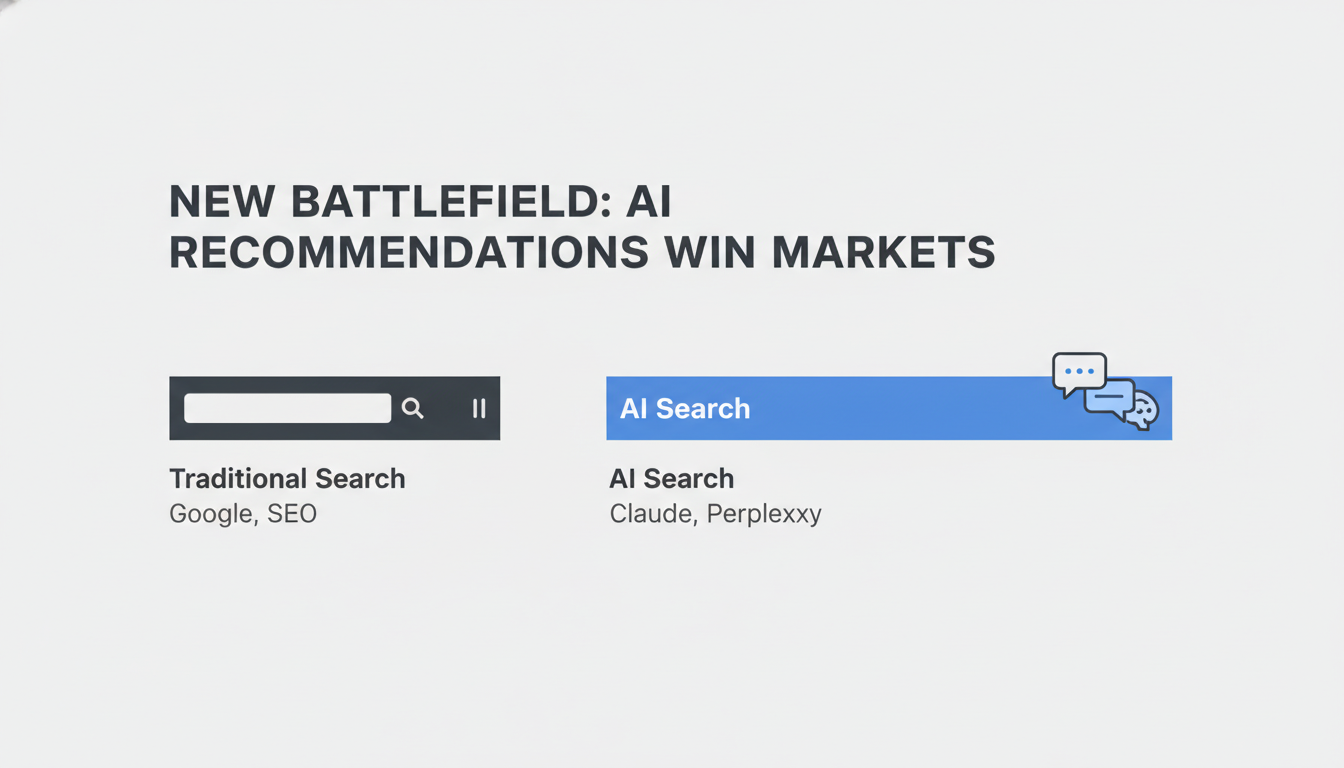
Your competitors aren't just ranking in Google anymore. They're showing up in ChatGPT, Claude, Perplexity, and Gemini—and you have no idea how often or in what context. Traditional competitive analysis stops at search rankings and traffic estimates. That approach is now fundamentally incomplete.
We built GeoRepute because we saw strategy teams making critical positioning decisions with half the data. They knew where competitors ranked. They didn't know which AI platforms were recommending those competitors, for which queries, or why. That gap between what teams measured and what actually influenced buyer decisions kept widening.
What AI Visibility Actually Measures (And Why It Changes Everything)
When a potential client asks ChatGPT or Perplexity for recommendations in your category, who gets mentioned? How often? In what position? For which specific queries?
We track brand mentions and visibility across ChatGPT, Claude, Gemini, Perplexity, and Copilot in a single dashboard. Not estimates. Actual measurements of when and how AI platforms surface your brand versus competitors.
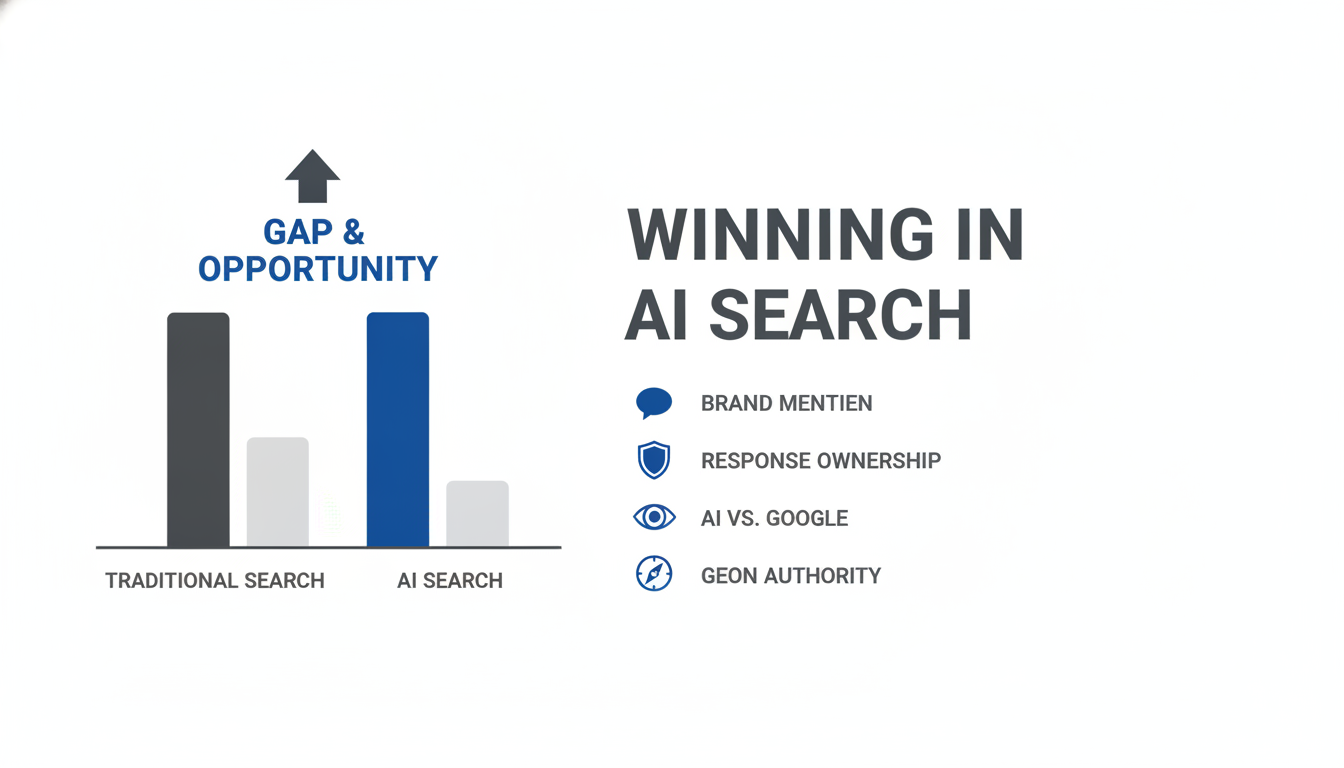
This matters because AI platforms don't just replicate Google rankings. A competitor might sit on page three in Google but dominate AI responses. Another might rank first organically but never get mentioned by AI at all. Strategy teams optimizing for the wrong visibility metric waste months of positioning work.
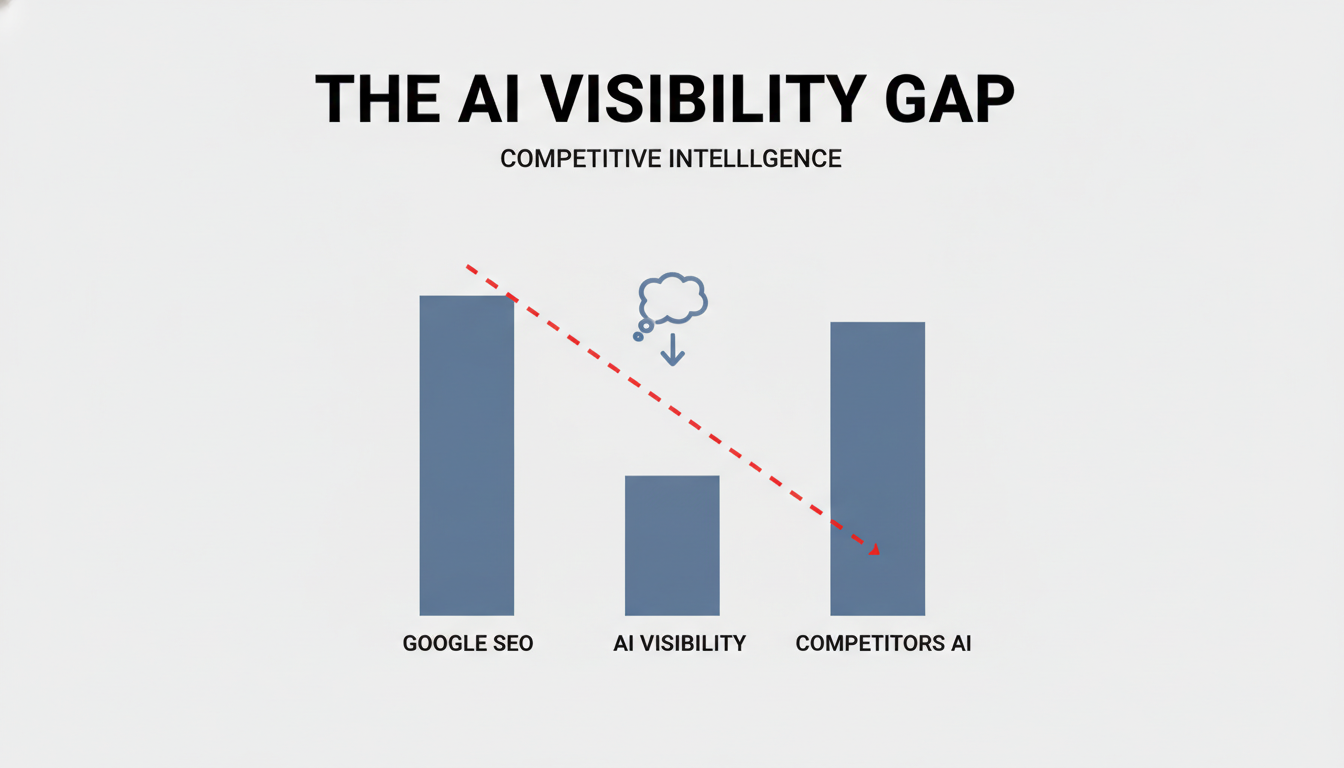
The Visibility Gap Most Teams Never See
We compare AI search visibility directly against Google Search Console data—rankings, traffic, and clicks. The discrepancies reveal which competitors own AI mindshare versus organic search real estate.
One consulting firm we measured ranked #2 for their primary keyword in Google. Zero mentions in AI responses for the same query. Their competitor ranked #7 but appeared in 80% of AI answers. Guess which one prospects actually contacted?
How to Track Who Owns Which AI Answers (Query by Query)
Competitive intelligence isn't useful if it's vague. "Your competitor has strong visibility" doesn't inform strategy. "Competitor X appears in 73% of AI responses for 'enterprise risk assessment tools' but only 12% for 'compliance automation software'" does.
We break down which competitors hold which AI answers for which search queries, command by command. You see exactly where you win, where you lose, and where the white space exists.
The Competitive Visibility Matrix
Here's what the competitive landscape looks like when you measure what actually matters:
Competitor | Google Rank | AI Mention Rate | Primary Query Ownership | GEON Score
---|---|---|---|---
Your Brand | #3 | 34% | Risk management tools (47%) | 68
Competitor A | #1 | 21% | Compliance software (63%) | 71
Competitor B | #5 | 67% | Enterprise assessment (81%) | 79
Competitor C | #2 | 8% | None dominant | 52
This view changes how you position, which terms you target, and where you invest content resources. Competitor B doesn't dominate Google, but they own AI visibility for high-intent queries. That's the actual competitive threat.
Understanding the GEON Score: Brand Authority for AI Search
We developed the GEON score to measure what traditional domain authority misses: brand trust, market fit, and visibility specifically for AI search contexts.
The score ranks brand authority, trust, visibility, and market alignment according to a documented formula. It answers the question every strategy team asks: "Why does the AI mention them instead of us?"
A high GEON score means AI platforms recognize your brand as authoritative and relevant. A low score—even with strong Google rankings—means you're invisible where decisions increasingly happen.
What Drives GEON Score Changes
We've measured hundreds of brands. The patterns are clear:
Consistent mentions across multiple sources: Brands appearing in diverse, credible contexts score higher than those concentrated in a single channel
Contextual relevance: Being mentioned in the right context for the right queries matters more than raw mention volume
Recency signals: AI platforms weight recent, active brands over historical mentions
Trust indicators: Third-party validation, case studies, and demonstrated expertise compound authority
You can't optimize what you don't measure. Most competitive intelligence platforms still operate like it's 2018.
The Actual Process: How to Implement AI-Era Competitive Intelligence
Measuring competitive visibility in AI search requires a different approach than traditional SEO monitoring.
Step 1: Map Your Core Query Set
Identify the 20-30 queries that matter most to your positioning. These aren't SEO keywords—they're the actual questions prospects ask when evaluating solutions in your category. Include variations in phrasing and specificity.
Step 2: Track Competitor Mentions Across All AI Platforms
Run those queries systematically across ChatGPT, Claude, Gemini, Perplexity, and Copilot. Document which competitors appear, in what position, with what context. Do this weekly. AI responses shift faster than organic rankings.
Step 3: Cross-Reference with Traditional Metrics
Pull your Google Search Console data for the same queries. Compare AI visibility with organic rankings and traffic. The gaps tell you where the market is moving and where you're exposed.
Step 4: Analyze Query Ownership Patterns
Which competitors own which query categories? Where do you have white space? Where are you losing ground? Build a query-level competitive map that shows actual answer ownership, not just rankings.
Step 5: Calculate Competitive GEON Scores
Measure brand authority signals across all platforms. Understand why AI platforms trust certain competitors more than others. Use that intelligence to inform your content strategy and positioning.
What This Changes About Your Competitive Strategy
When you measure AI visibility alongside traditional metrics, your entire competitive strategy shifts.
You stop chasing keywords competitors already own in Google. You start identifying queries where AI platforms haven't settled on a dominant answer yet. That's where positioning work actually compounds.
You stop wondering why prospects mention competitors you outrank. You see exactly which AI platforms recommend them, for which queries, and why.
You stop making positioning decisions based on incomplete data. You know where you stand in the channels that increasingly drive discovery and evaluation.
One strategy team we work with restructured their entire content calendar after seeing their AI visibility data. They'd been targeting queries they already dominated organically while ignoring categories where AI platforms consistently recommended competitors. Three months after shifting focus, their AI mention rate doubled. Demo requests followed.
Frequently Asked Questions
How often do AI search results change compared to Google rankings?
AI responses shift weekly, sometimes daily, as models update and new content enters training data. Google rankings move more slowly. This means competitive intelligence requires more frequent measurement for AI visibility than traditional SEO monitoring provides.
Can you optimize for AI visibility the same way you optimize for SEO?
No. AI platforms weight different signals than search engines. Trust, context, recency, and multi-source validation matter more than backlinks and keyword density. The optimization strategies are related but distinct.
Which AI platform matters most for competitive intelligence?
It depends on your market. We track all major platforms because different audiences use different tools. B2B researchers often use Perplexity or ChatGPT. Technical audiences sometimes prefer Claude. You need visibility across all of them, not just one.
How do you measure GEON score for competitors?
We apply the same documented formula to all brands in a category: mention frequency, contextual relevance, multi-platform presence, trust signals, and recency indicators. The score is comparative—it shows relative authority within your competitive set.
What's the minimum query set needed for useful competitive intelligence?
Start with 15-20 core queries that represent how prospects actually evaluate solutions in your category. You can expand from there, but that set gives you enough signal to identify patterns and gaps in competitive visibility.
Moving Forward
Competitive intelligence in 2025 requires measuring visibility where decisions actually happen. That includes AI platforms, not just search engines. The teams that adapt their measurement approach first create positioning advantages that compound over time.
We built these tools because we needed them ourselves. The gap between what teams measured and what actually mattered kept widening. Now we know which competitors own which AI responses, why, and what to do about it.
Subscribe to our insights for ongoing competitive intelligence research, measurement frameworks, and strategic positioning analysis. We publish new data and case studies every week.
Related reading
How to Improve World Cricket Rankings: The Hidden Strategy Behind National Success
Comments