
Competitive intelligence

Most Companies Are Fighting Blind
Your competitors know exactly where they appear in ChatGPT, Claude, and Perplexity. They track which prompts surface their brand and which ones don't. Meanwhile, you're still measuring last decade's metrics—organic rankings that tell you nothing about AI visibility.
The market has shifted. Traditional competitive intelligence stops at Google Search Console. That approach leaves you exposed to a reality most strategy teams haven't confronted: AI engines now shape buying decisions before prospects ever see your website.
What Competitive Intelligence Actually Measures Now
We built our platform around a simple observation: strategy teams need to see the complete competitive picture, not fragments of it.
Traditional tools show you keyword rankings. Useful, but incomplete. What they miss:
Which competitors appear in AI responses for your target prompts
How AI engines evaluate your brand authority against direct competitors
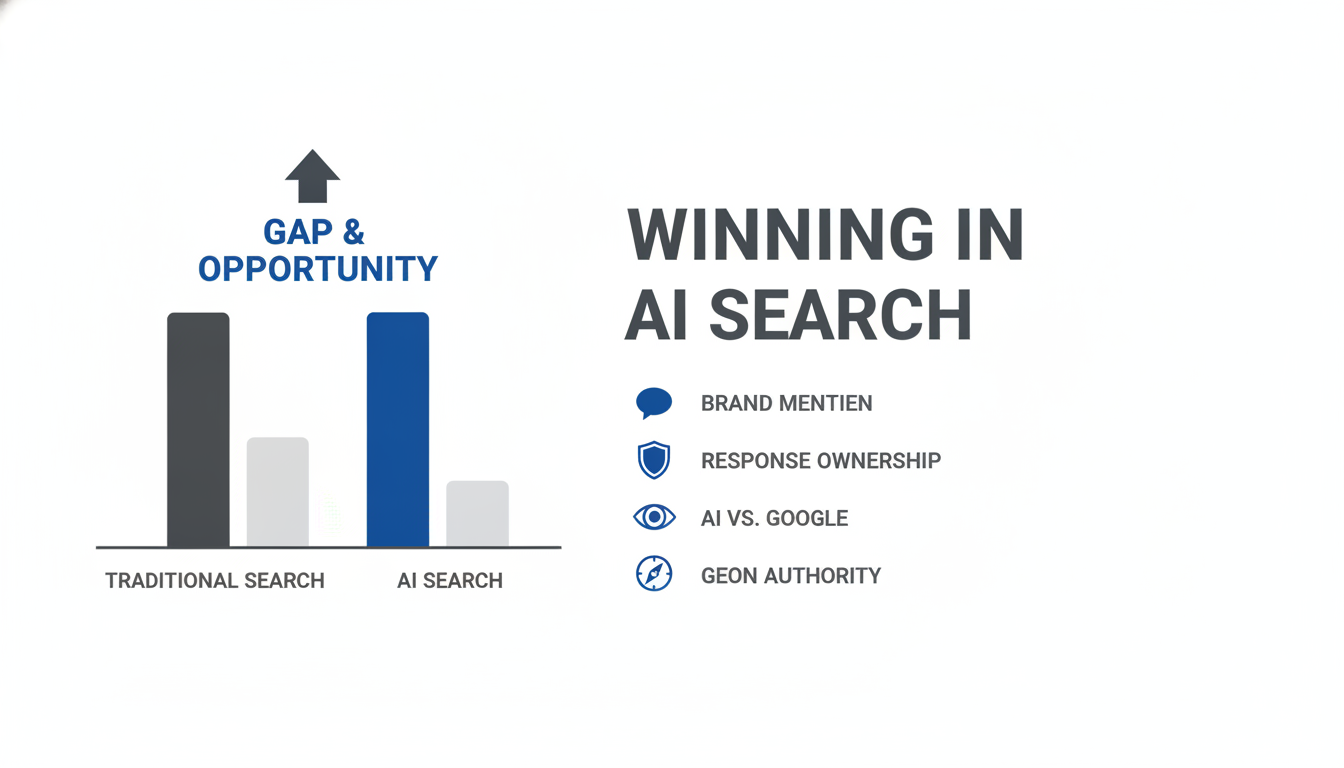
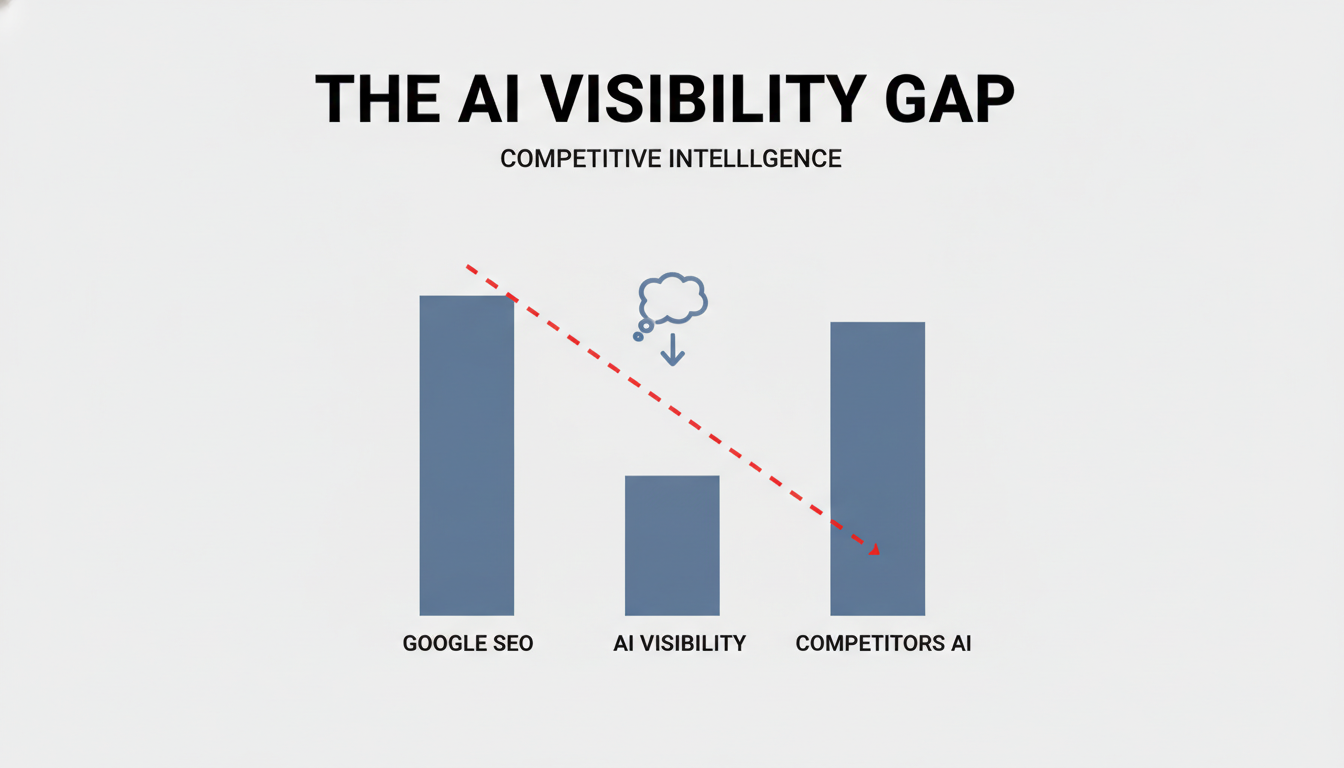
The gap between your Google visibility and your AI visibility
Which specific queries trigger competitor mentions instead of yours
We measure brand mentions and visibility across ChatGPT, Claude, Gemini, Perplexity, and Copilot in one consolidated report. Every competitor. Every prompt. Every response.
How We Expose What Competitors Actually Control
Here's what consultants and strategy teams see when they run competitive analysis through our system:
Prompt-by-Prompt Ownership Mapping
We show exactly which competitors hold which AI responses. Not guesswork—measured data. You see the specific search queries and prompts where competitors appear, and where you don't.
One retail client discovered their main competitor appeared in 73% of AI responses for "sustainable fashion brands in Tel Aviv"—while they appeared in 11%. Google rankings told a different story: they were competitive. AI visibility revealed the truth.
The GEON Score: Brand Authority for AI Search
We developed a scoring system that ranks brand authority, trust, visibility, and market fit specifically for AI search environments. The formula is documented and consistent.
GEON scores answer the question every strategy team asks: "How do AI engines actually evaluate us against competitors?" The score breaks down into measurable components:
Authority signals AI engines recognize
Trust indicators that influence selection
Visibility patterns across multiple AI platforms
Market fit relevance for target queries
Google Search Console Integration
We compare AI search visibility directly against your Google Search Console data—rankings, traffic, and clicks. This reveals the disconnect most companies don't see coming.
Strong Google performance doesn't guarantee AI visibility. We've measured companies ranking in the top three for commercial keywords who don't appear in a single AI response for the same terms.
Why Traditional Competitive Intelligence Fails Now
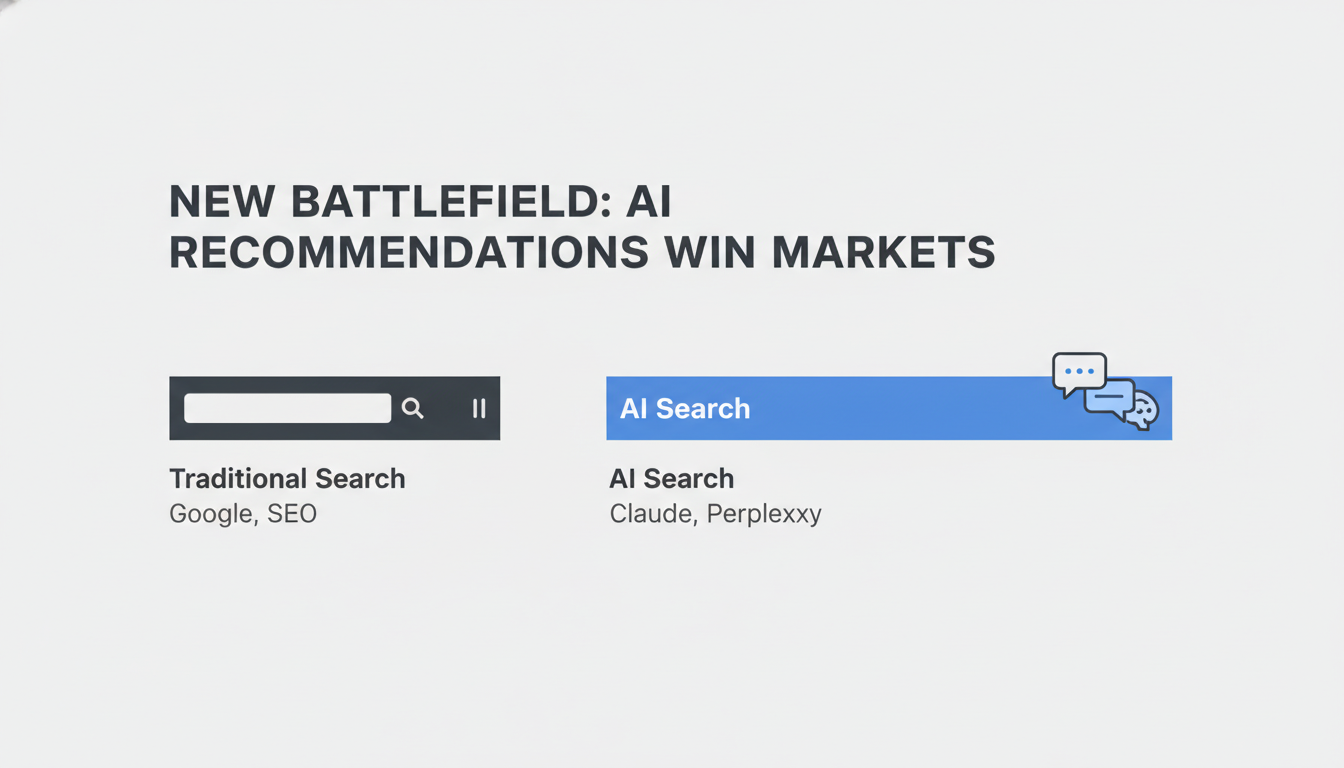
Most competitive analysis tools were built for a different search environment. They track what worked when Google was the only game that mattered.
Consider what happens when a potential client asks Claude or Perplexity to recommend solutions in your category. Traditional tools can't tell you:
Whether you were mentioned
Which competitors were recommended instead
What factors influenced the AI's selection
How to improve your position for next time
We answer all four questions with measured data, not assumptions.
Real-Time Competitive Positioning
AI responses change. Competitor positioning shifts. New players emerge in AI results before they ever rank on Google.
We track these changes in real time. When a competitor gains ground in AI visibility, you see it immediately—with context about which specific prompts drove the change.
A B2B software company in our system noticed a competitor appearing in AI responses for queries the competitor didn't even target with traditional SEO. That early warning led to a strategic content adjustment that protected their position.
Competitive Intelligence Comparison: Traditional vs. AI-Ready
Traditional Competitive Intelligence | AI-Ready Competitive Intelligence |
|---|---|
Tracks Google keyword rankings | Tracks AI response patterns across 5 platforms |
Shows competitor backlink profiles | Shows which prompts trigger competitor mentions |
Measures domain authority | Measures brand authority for AI selection (GEON score) |
Reports on historical ranking changes | Provides real-time AI visibility tracking |
Estimates competitor traffic | Maps exact competitor presence in AI responses |
Limited to search engine data | Integrates Google Search Console with AI visibility metrics |
What Strategy Teams Do With This Data
Competitive intelligence only matters if it drives decisions. We've watched consultants and strategy teams use these insights in three consistent ways:
Identify Vulnerability Before Revenue Impact
When competitors gain AI visibility for your core positioning, you need to know immediately—not quarters later when pipeline numbers drop. Teams track competitor movement and adjust positioning while they still have advantage.
Find Undefended Territory
We've seen clients discover entire prompt categories where no competitor has established AI presence. These gaps represent positioning opportunities traditional tools would never surface.
Quantify Brand Strength Against Named Competitors
Strategy presentations need numbers. GEON scores provide a defendable metric for brand authority comparisons. "We score 67; our main competitor scores 43 in AI search authority" carries weight in boardroom discussions.
The Measured Demand Without a Clear Winner
Competitive intelligence has always mattered. What changed is how you measure it.
There's documented demand for tools that answer the AI visibility question. Companies know they need this intelligence—they're searching for it, asking about it, budgeting for it. But the market hasn't settled on a dominant solution.
That's the opportunity. We built a platform with specific proof points addressing the exact gaps strategy teams identify:
Multi-platform AI monitoring in one report
Competitor-by-competitor, prompt-by-prompt mapping
Quantified brand authority scoring
Integration with existing Google performance data
These aren't theoretical features. They're measured capabilities we deliver in every analysis.
Frequently Asked Questions
How do you track AI responses across multiple platforms?
We query ChatGPT, Claude, Gemini, Perplexity, and Copilot with relevant prompts for your market, then analyze which brands appear in responses. The data consolidates into a single comparative report showing competitor presence across all platforms.
What makes the GEON score different from domain authority?
Domain authority predicts Google ranking potential. GEON score measures factors that influence AI engine selection—brand trust signals, authority markers, content relevance, and visibility patterns specific to AI responses. Different engines, different metrics.
How quickly do you detect changes in competitor AI visibility?
Our system runs continuous monitoring. When competitor mentions increase or new players appear in AI responses for tracked prompts, you see the change within hours, not weeks.
Can you track competitors in specific geographic markets?
Yes. We measure AI visibility for market-specific queries and can filter competitive analysis by geography, showing which competitors dominate AI responses in Israel, for example, versus global results.
How does this integrate with our existing competitive analysis?
We connect directly to Google Search Console to compare traditional search performance with AI visibility. You see both datasets side by side, revealing gaps where Google rankings don't translate to AI presence.
Conclusion
Competitive intelligence used to mean tracking rankings and backlinks. That approach now captures half the picture—the half that matters less every quarter.
AI engines influence buying decisions at the awareness stage, before prospects compare options on your website. If competitors appear in those AI responses and you don't, you've lost ground before the competition formally begins.
We fill the intelligence gap with measured data: which competitors appear where, which prompts they own, and how your brand authority compares in the environment that increasingly shapes initial consideration sets.
Follow us for insights on AI visibility, competitive positioning, and the evolution of brand authority in AI-driven search.
Comments